

 Back
Back
Refunds for unlawful utility charges are a top priority for Maureen Willis, the veteran litigator who became Ohio’s new consumers’ counsel this month.
The Office of the Ohio Consumers’ Counsel is a state-funded agency that represents ratepayer interests in gas and electric utility cases, including matters relating to House Bill 6, the 2019 law at the heart of Ohio’s nuclear and coal bailout scandal. The office also works for legislative reform to promote competition, eliminate subsidies and protect energy affordability for vulnerable groups.
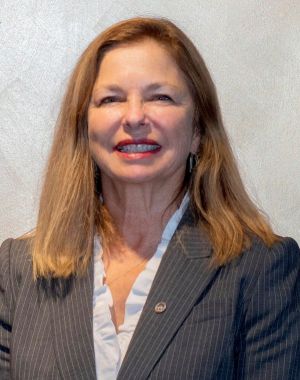
The Energy News Network spoke with Willis about her agenda as Ohio’s official advocate for residential ratepayers.
“If consumers are charged and there’s a decision by the court or even a federal agency that the charges were unlawful or unreasonable, we think they should get the refund all the way back to when they paid it,” Willis said.
Instead, a majority on the Ohio Supreme Court has held that a 1957 case against “retroactive rulemaking” forbids refunds of charges, called riders. That’s the case even if the court holds the charges are otherwise unlawful or unreasonable and even if the riders were not part of a full ratemaking case.
So, even though the Ohio consumers’ counsel has helped consumers avoid $433 million in charges since 2009, they’re still out $1.5 billion in refunds. That makes the wins something of a “hollow victory, because you’re not getting that money back,” Willis said. “But we will continue to fight.”
“We want to advocate for consumers to get energy at the least cost,” Willis said, noting the agency generally considers itself agnostic on the source of electricity. Nonetheless, “renewables are becoming more and more economic, and that certainly is something that we take into account in the mix,” Willis said.
A 2023 report by Energy Innovation Policy & Technology found that 99% of U.S. coal plants are more costly to keep running than replacing them with new solar, wind or energy storage.
Yet HB 6 and regulatory rulings before it require Ohio ratepayers to subsidize costs for two 1950s-era coal plants. OCC continues to contest those charges.
“To the extent that there are subsidies built into the rate and those subsidies are attached to monopoly rates, it creates a problem” by undermining the market, Willis said. “In Ohio, we do rely on the competitive market to bring consumers lower prices and greater innovation.”
“From our perspective, energy efficiency is a good thing,” Willis said, noting that it can help reduce people’s utility bills. Ten years ago, Ohio law required utilities to meet an energy efficiency standard. Back then, OCC was among parties pushing regulators to require FirstEnergy to bid that energy efficiency into a capacity market auction, which lowered costs to consumers. But in 2019, HB 6 gutted Ohio’s energy efficiency standard.
Now, though, consumers can get energy efficiency products and services from competitive suppliers, Willis said. So, “we would say that the utility really has no business to be in the energy efficiency business anymore.” OCC also objects to “shared savings,” which it views as extra profits for utilities.
A bipartisan bill to let utilities run voluntary energy efficiency programs is pending in the General Assembly. Supporters say utility-run programs can make savings simpler for consumers and can produce benefits for all ratepayers by reducing system-wide demand.
OCC has “always battled” electric security plans, or ESPs, Willis said. “We believe they are crony capitalism.”
A traditional ratemaking case requires utilities to show all their projected costs and revenues, based upon actual data from a representative test year. ESP cases don’t require that detailed scrutiny. They allow utilities to raise rates for isolated issues, without presenting those charges in the context of all of a company’s financial activities. And utilities can reject any change regulators might try to make to a plan — effectively giving them unequal, outsized bargaining power, Willis said.
Along those lines, OCC supports Senate Bill 143, which would get rid of ESPs and strengthen corporate separation between utilities and their affiliates.
OCC opposes Senate Bill 102, which would require periodic rate cases but still allow multiple riders. And the bill would let utilities use projections instead of actual data from test years in full ratemaking cases. Challengers also would have fewer opportunities to conduct pre-hearing discovery from utilities and others.
Discovery procedures are “truth-finding tools,” Willis explained. “To the extent you put limits on those, you’re saying, ‘We don’t really want you to get to the truth; you’re just going to have to accept what the utility has filed.’”
“It’s really an unfair situation where we’re stayed when it comes to protecting consumers,” Willis said. “But when it comes to charging consumers rate increases, there’s no stay on those.”
A Sept. 22 filing by OCC asked the PUCO to lift the stay in the four HB 6-linked cases. An Oct. 2 filing by FirstEnergy opposed ending the stay but did not address the argument that it’s unfair to continue the stay while the company has a separate case seeking more money from ratepayers.
OCC filed a complaint with federal regulators last month, asking them to review utilities’ “supplemental” transmission projects. As things stand, neither the Federal Energy Regulatory Commission nor the grid operator PJM reviews charges for those projects before utilities ask state regulators to let them pass along the costs to ratepayers. Nor does the PUCO scrutinize the charges, Willis said.
Since 2017, Ohio utilities have added more than $6 billion for “supplemental” projects to their local transmission plans in Ohio, according to the complaint. By filing its complaint, OCC hopes “that someone starts looking at these projects for need, cost-effectiveness and prudence,” Willis said.
OCC is also concerned about the pending transfer of the Energy Harbor (formerly FirstEnergy Services) nuclear plants to Vistra for one of that company’s subsidiaries to run. “We want to make sure that the competitive market is protected,” Willis said.
While the grid needs to be updated, Willis doesn’t want it done through “gold-plating.” Generally speaking, that involves adding pricey equipment that’s not really necessary. The added spending increases the base on which a utility earns a return on investment.
Instead, Willis wants regulators to scrutinize any grid modernization plan carefully: “Is it really needed? And who is benefitting? Is it really to the benefit of residential consumers?” she asks.
“Payment assistance is something we’re always going to be looking at,” along with the prices charged to low-income customers, disconnection data and more, Willis said. “Part of our advocacy must certainly be to protect the at-risk consumers.”


.svg)
