

 Back
Back
SOLAR: New Hampshire regulators reject a stakeholder agreement to extend net metering to 2044, a decision that will likely slow solar development in the state and be fatal for larger projects now in the planning stages, advocates say. (Concord Monitor)
ALSO:
CLIMATE: The new version of Maine’s climate plan prioritizes renewable energy, energy efficiency measures, climate adaptation, and environmental justice, but scales back previous goals for electric vehicle adoption. (Portland Press Herald, subscription)
OFFSHORE WIND:
TRANSMISSION:
RENEWABLES: Harvard, MIT, and Massachusetts General Brigham hospital partner to buy up to 1.3 million megawatt-hours of power annually from a Texas solar installation and North Dakota wind facility. (Harvard Magazine)
GEOTHERMAL: A networked geothermal system in Massachusetts is one of a handful of projects nationwide demonstrating the potential of thermal systems to replace traditional gas utility service. (Utility Dive)
FOSSIL FUELS: A former coal plant in Connecticut will soon be demolished as the state moves away from fossil fuel power generation. (Connecticut Public Radio)
COMMENTARY: Energy storage is the “cornerstone of a clean energy grid” and offers important environmental and economic benefits, despite critics’ inflated concerns about upfront costs, say two Northeast clean energy advocates. (CommonWealth Beacon)
STORAGE: The United Auto Workers announces a campaign to unionize Ford Motor Co. and SK On’s joint battery project in Kentucky after a supermajority of workers sign union authorization cards. (Louisville Courier-Journal, Kentucky Lantern)
ALSO: A Texas startup is operating a 53 MW storage project made up of used electric vehicle batteries, and appears to be the largest grid storage plant in the world. (Canary Media)
POLITICS:
HYDROGEN: The Biden administration signs an agreement with developers to build a $1.2 billion hydrogen hub in Texas. (Houston Chronicle)
NUCLEAR:
ELECTRIC VEHICLES:
SOLAR: A Virginia county board discusses changing its solar ordinance to tighten restrictions on projects larger than five acres. (Bristol Herald-Courier)
CARBON CAPTURE: Exxon Mobil and other Gulf Coast oil and gas companies lobby the incoming Trump administration to preserve an $85 per ton tax credit for carbon storage since they’ve already invested in development of the technology. (Houston Chronicle)
OIL & GAS: The Biden administration still aims to release a new rule to require oil and gas companies to cover cleanup costs from offshore drilling rigs, but time is running out and the incoming Trump administration could rewrite or delay it. (E&E News)
BIOFUELS: The Tennessee Valley Authority and an energy nonprofit announce the successful demonstration of renewable diesel for power generation at a 76 MW gas and diesel-fired power plant in Tennessee. (news release)
UTILITIES: Dominion Energy asks Virginia regulators for approval to charge customers for costs associated with its offshore wind farm and moves to develop small modular nuclear reactors. (VPM)
COMMENTARY: The incoming Trump administration’s promises to roll back electric vehicle tax credits could rattle Georgia’s industry, writes a columnist. (Georgia Recorder)
HYDROGEN: Federal officials announce the first $22 million for a Midwest hydrogen production hub that could receive up to $1 billion, though it’s unclear whether the incoming Trump administration will support the technology. (E&E News)
NUCLEAR:
ELECTRIC VEHICLES:
DISTRICT ENERGY: Duluth, Minnesota, is studying the potential for a wastewater effluent-powered district energy system to heat downtown buildings. (Smart Cities Dive)
PIPELINES: Federal appeals court judges hear oral arguments in a case brought by a carbon pipeline developer over whether two Iowa counties could set restrictions on the company’s project. (Iowa Capital Dispatch)
CLIMATE: Data centers and AI are threatening U.S. climate goals as more than 200 gas plants are in various stages of development across the country to serve the industry. (Washington Post)
GRID:
SOLAR: Progress continues on a $2.3 million solar installation on the administration building in Iowa’s most populous county. (KCCI)
CLEAN ENERGY: A Michigan Congress member, whose district is the site of a Chinese company’s proposed battery manufacturing plant, cosponsors legislation to prevent Chinese companies from accessing Inflation Reduction Act tax credits. (Solar Power World)
BIOFUELS: A South Dakota board approves $12.6 million in funding support for a $500 million processing plant that’s expected to help meet demand for soy-based biofuels. (South Dakota Searchlight)
WORKFORCE: Kentucky communities where developers are building large battery factories that are expected to create thousands of jobs are experiencing housing shortages, with a legislative study finding the state is 206,207 housing units short of what it needs. (Lexington Herald-Leader)
OIL & GAS:
SOLAR:
WIND:
CLIMATE: New research finds soaring insurance premiums fueled by climate change increase the probability of homeowners falling behind on their mortgages. (Floodlight)
GRID:
POLITICS:
NUCLEAR: A new report suggests Texas lawmakers rework the nuclear permitting process and establish a state fund to incentivize construction of new plants, similar to what the state established recently for gas-fired power plants. (Utility Dive)
HYDROELECTRIC: The Tennessee Valley Authority signs a deal with two companies to receive power from a 377 MW portfolio of four hydroelectric dams in Tennessee and North Carolina. (news release)
COMMENTARY: With the incoming Trump administration unlikely to address climate change, it’s up to the private sector to handle the job instead, writes the head of a conservative climate group. (South Florida Sun-Sentinel)
SOLAR: Minnesota officials announce the completion of the first phase of a massive solar project that’s set to replace the retiring Sherco coal plant. (WCCO)
ALSO:
RENEWABLES: Ann Arbor, Michigan, will launch its voter-approved “sustainable energy utility” by assembling an initial 20 MW of demand and financing various renewable energy, storage and efficiency projects. (Canary Media)
PIPELINES: Summit Carbon Solutions reapplies for a carbon pipeline permit in South Dakota with significant reroutes after its initial application was rejected last year. (South Dakota Searchlight)
BATTERIES: A company announces plans for a $547 million battery components plant near St. Louis that would serve energy storage and electric vehicle markets. (FOX 2)
GRID: Ratepayer advocates file a complaint with federal regulators seeking changes to PJM’s capacity market design that they say is causing spiking capacity prices. (Utility Dive)
UTILITIES:
CLIMATE: A firm that helps real estate, insurance and financial companies predict how climate models could result in local impacts develops a tool to measure how resilient and at-risk U.S. cities are to climate change. (Washington Post)
EFFICIENCY: Wisconsin energy efficiency contractors have been promoting an Inflation Reduction Act-funded program that has deployed nearly $75 million to serve the state’s residents. (WUWM)
WIND: With three coal-fired power plants in Arkansas expected to close by 2030, renewable energy advocates tout the state’s emerging wind industry as a potential replacement. (Arkansas Advocate)
ALSO: Dominion Energy crews begin installing ductwork along Virginia roadways for power lines to the utility’s offshore wind farm. (WVEC)
SOLAR:
OIL & GAS:
STORAGE: Two companies move to assemble a 1 GW virtual power plant in Texas by linking hundreds of thousands of smart thermostats, with plans to eventually add in other customer-owned assets like solar panels, batteries, and electric vehicles. (Canary Media)
ELECTRIC VEHICLES: Austin, Texas’ transit agency shelves 46 electric buses for at least a year because the company that makes them went bankrupt and there aren’t yet enough chargers to keep them running all day. (Austin Monitor)
NUCLEAR:
COAL ASH: U.S. EPA officials say they’re working to address the discovery of nearly 300 tons of coal ash near a North Carolina elementary school. (WCNC)
CARBON CAPTURE: The U.S. Energy Department awards $26 million to a proposed offshore carbon capture and storage facility near Louisiana that’s expected to take emissions from a liquified natural gas export terminal. (The Advocate)
GRID:
POLITICS:
COMMENTARY:
WIND: President-elect Trump’s ambitions to shut down the offshore wind industry would push New York’s climate goals further out of reach, but it remains unclear whether his administration will be able to pull it off. (New York Focus)
ALSO:
CLEAN ENERGY: A Cornell University researcher says New York will need 40 GW of dispatchable power to meet its climate goals, exceeding a NYISO forecast that some groups dismissed as “alarmist.” (Syracuse.com, subscription)
UTILITIES: Facing conditions more familiar to the West Coast, utilities in New Jersey are taking precautions to avoid sparking wildfires amid a persistent drought. (WPVI)
TRANSPORTATION: New York City’s Metropolitan Transportation Authority approves a revamped congestion pricing plan, which still needs federal approval and faces challenges from New Jersey officials. (Bloomberg)
GRID:
TRANSMISSION: A study from Cornell University researchers says making beneficiaries pay for new power lines is consistent with decades of legal precedent. (news release)
HYDROPOWER:
CLIMATE: Portland, Maine’s city council votes to establish a dedicated climate fund for projects to reduce the city’s emissions. (Portland Press Herald)
COMMENTARY: Two scientists say Maryland has an opportunity to become a national leader on reducing emissions during the Trump administration. (Baltimore Sun)
OIL & GAS: A petroleum firm and a data center developer plan to install a natural gas-powered cryptocurrency mining facility at an oil and gas well on Alaska’s North Slope. (Northern Journal)
ALSO: A petroleum executive predicts only moderate oil and gas production increases during a more permissive Trump administration, with most of the gains coming from the Permian Basin. (Hart Energy)
HYDROPOWER:
SOLAR:
HYDROGEN: A New Mexico electrical cooperative proposes a solar-powered green hydrogen production facility and energy storage system using treated wastewater from an abandoned mine. (Clean Technica)
STORAGE: An Arizona utility proposes a 200 MW battery energy storage system with the capacity to power 45,000 homes for four hours during peak demand. (news release)
ELECTRIC VEHICLES: Oregon has recorded 102,461 zero-emissions vehicle registrations, a 400% increase from 2019. (OPB)
GEOTHERMAL: The federal Bureau of Land Management plans to auction 6,061 acres in western Utah for geothermal power development. (St. George News)
UTILITIES: A Washington state utility pushes back on Bonneville Power Administration’s preference for SPP’s day-ahead power market, saying the California grid operator’s competing proposal would yield more benefits. (RTO Insider, subscription)
LITHIUM: The developer of the contested Rhyolite Ridge lithium mine in Nevada plans to move forward even if the incoming Trump administration kills federal electric vehicle incentives. (NPR)
POLITICS: Nevada conservationists predict the incoming Trump administration will stifle clean energy development on public lands in the state and encourage new natural gas plants. (Nevada Current)
COMMENTARY: A New Mexico petroleum executive urges developers of a proposed liquefied natural gas export facility to draw from oil and gas fields across the West, rather than relying entirely on the Permian Basin. (Santa Fe New Mexican)
This article was originally published by the Idaho Capital Sun.
The Boise Airport became powered by 100% renewable energy this fall after Boise opted to be the first city to sign on to an optional new renewable energy program through Idaho Power.
The city of Boise is purchasing enough solar energy to power both the Boise Airport and the Lander Street wastewater treatment facility through 100% renewable energy, Steve Hubble, climate action manager for the city of Boise, said in an interview Thursday.
The Boise Airport is likely the first municipally-owned major airport in Idaho to become 100% solar energy powered. Hubble said he isn’t familiar enough with municipalities in North Idaho or eastern Idaho, which work with different utility companies, to know what their energy mix is.
“We’re the first municipality in Idaho to enter one of these Clean Energy Your Way contracts, so that’s pretty exciting in and of itself,” Hubble said. “And then from a quantitative perspective, I’m always going to link that back to what the city’s goals are.”
The move to powering its facilities by renewable energy represents Boise moving forward on climate policies at a time when the Idaho Legislature is actively pushing back against environmental and climate programs. While the Idaho Legislature has not established formal climate goals, the city of Boise has specific goals it bases climate policies around.
Making the Boise Airport and Lander Street wastewater treatment plant 100% renewable-powered brings the city to 25% of its 2030 renewable energy goal for city government.

“So in other words, if you look at all the city’s electricity usage right now, about a quarter of it is being powered by renewable electricity, because the airport and Lander Street are two of our three biggest electricity-using facilities,” Hubble said.
Boise had been powering the airport and Lander Street facility with the standard energy it received from Idaho Power, which includes an energy portfolio of renewable energy like hydro as well as nonrenewable energy sources, like coal. To go 100% renewable, the city bought enough renewable solar energy to cover 100% of the energy those two facilities use.
The project is part of Idaho Power’s Clean Energy Your Way program, which is optional and does not change the energy mix that regular Idaho Power customers receive or the rates they pay, Idaho Power Director of Economic Development and Innovation Megan Ronk said in an interview.
Idaho Power’s largest source of energy today is renewable hydro power, Ronk said. For 2022, 24% of Idaho Powers energy generation capacity was coal, Idaho Power reported. Idaho Power has a goal to have 100% clean energy by 2045.
For customers who want to go renewable sooner, Idaho Power created Clean Energy Your Way, Ronk said.
“Clean Energy Your Way is really intended to provide a menu of options to meet customers where they are at in meeting their respective renewable and clean energy goals,” Ronk said in a phone interview.
The Boise City Council approved participating in the Clean Energy Your Way program in October 2023.
“This is possible because Boiseans have been so clear that they expect our city to lead in protecting our environment for the future,” Boise Mayor Lauren McLean said in a written statement after the Boise City Council vote. “It is important that we are resilient and because we want our kids, and their kids, to be healthy and to have a place where they can live and thrive into the future.”
After the Boise City Council approved participating in the program, Idaho Power and the city applied for approval from the Idaho Public Utilities Commission, which regulates utility companies in Idaho.
Under the application for the project, Boise sought approval to buy up to 10 megawatts of power from Black Mesa Energy solar project in Elmore County. In addition to the normal Schedule 19 rate Boise pays for energy not from the solar project, Boise will pay a fixed cost charge for each kilowatt hour of energy received from the Black Mesa Energy solar project. Excess energy generated but not used will be credited to the city.
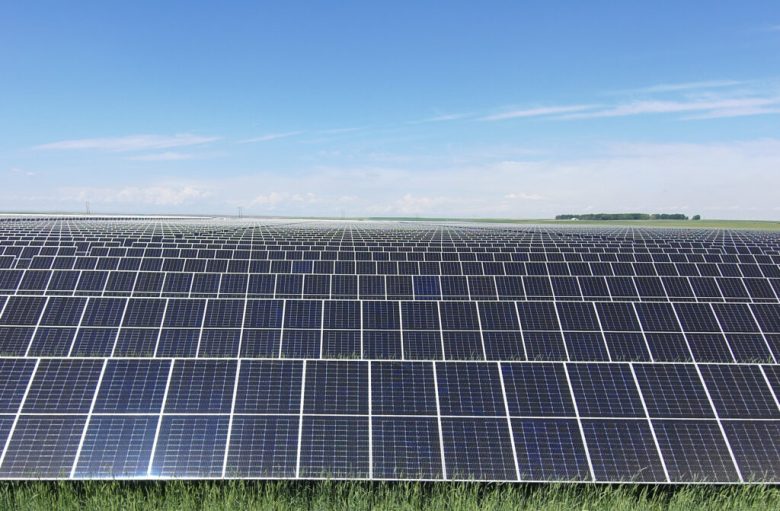
The Idaho Public Utilities Commission approved the application in August, which allowed the city to begin purchasing the solar energy Sept. 1.
The city’s contract is for 20 years. Hubble told the Sun he expects the city to pay slightly more for energy during the first 18 months of the project. Then, for the duration of the first 10 years, Hubble expects the city to either realize a savings or be paying no more than it would have regularly, without going renewable.
“We’re pretty excited about that savings opportunity, because basically this contract allows us to kind of lock in the rate for a portion of our power cost, and power costs do change, so that’s something we’re really excited about,” Hubble said. “It’s kind of cool, not only the renewable attribute of this, but that economic attribute of this is pretty exciting.”
Boise has a 25% share of the solar energy from the Black Mesa Energy project, while the remaining 75% is being used by Micron for renewable energy projects, Hubble said.
Idaho Power offers different types of Clean Energy Your Way programs for residential customers, businesses and large municipal customers like the city of Boise. The largest energy-using customers, like the city of Boise, are able to participate in the Clean Energy Your Way Construction agreement that powered the Boise Airport and Lander Street facility. Hubble thinks Boise’s project could set an example for other large Idaho Power municipal or industrial customers who want to go with renewable energy.
But there are other options for other types of Idaho Power customers too. Residential customers can cover all or part of their energy use with renewable wind and solar energy at a cost of 1 additional cent per kilowatt hour, with the ability to cancel any time. Business customers can purchase renewable energy certificates, with options to buy on a month-to-month basis or for a three-year commitment.
OFFSHORE WIND: A coalition of trade unions urges Connecticut, Massachusetts, and Rhode Island to triple their offshore wind procurement targets to help meet climate goals and create jobs. (Inside Climate News)
ALSO: Officials on Nantucket object to the terms of a mitigation agreement proposed by a planned offshore wind farm, saying the offer fails to address the harms the project will cause to the island. (Nantucket Current)
CRYPTO: A New York judge allows a cryptocurrency mining operation to keep running its fossil fuel-fired power plant, saying state regulators failed to justify their decision not to renew the facility’s permit. (WSKG)
HEAT PUMPS: Maine’s decision to incentivize whole home heat pump systems rather than individual rooms has driven a surge in homeowners taking advantage of the rebates. (Portland Press-Herald, subscription)
MICROGRIDS: A renewables-powered community microgrid in the country’s easternmost city is already proving to be a model for other towns along the Maine coast to reduce outages. (Inside Climate News)
SOLAR: Maryland communities attempt to stem the tide of solar development on open land, with Carroll County looking to strengthen its prohibition on solar projects on farmland and Harford County moving to place 1,100 acres of land into agricultural preservation. (Baltimore Sun, subscription)
BATTERIES: A Canadian company plans to open a lithium-ion battery manufacturing facility in New York, creating some 250 jobs. (The Post-Journal)
ELECTRIFICATION: Maine launches a $1 million study to determine the cost and logistics of electrifying four ports to cut diesel emissions from visiting ships. (Portland Press Herald, subscription)
NUCLEAR: New York’s energy authority begins to assess the possibilities for and interest in developing advanced nuclear facilities in the state. (RTO insider, subscription)
INDUSTRY: Decarbonizing the steel industry in states such as Pennsylvania will require enormous amounts of clean energy and deployment of new technologies. (Canary Media)
CLEAN ENERGY: In Vermont, experts and state leaders worry federal funding for clean energy and other environmental priorities could be withdrawn when Donald Trump takes office. (VTDigger)
COMMENTARY:


.svg)
