

 Back
Back
OFFSHORE WIND: Construction begins on New York’s largest offshore wind farm, as the state opens its fifth round of solicitations for new projects. (WSHU, Renewables Now)
ALSO:
CLEAN ENERGY: The Massachusetts House passes a bill to streamline permitting for clean energy projects along with new procurements. (Associated Press)
TRANSPORTATION: Transit and labor leaders push a plan for a high-speed rail line connecting New York and Boston in 100 minutes, including a new connection from Hartford to Providence. (Gothamist)
UTILITIES: Central Maine Power and Avangrid are seeking to waive a requirement that state regulators sign off on their proposed merger. (Maine Public)
ELECTRIC VEHICLES:
GRID:
SOLAR: A solar company and an affordable housing firm team up to enroll low-income New York City households in community solar. (Solar Builder)
EQUITY: A New York City council member is introducing a bill to require landlords to provide air conditioning for tenants during summer months. (Brooklyn Eagle)
COMMENTARY: A former congressman and a state representative from Pennsylvania support efforts to allow hydrogen produced from “low-leak” natural gas to qualify for a federal clean-energy tax credit. (TribLive)
SOLAR: Minnesota regulators are poised to approve a 250 MW solar project for Xcel Energy, the last of three large solar projects totaling $1.1 billion that will replace a massive coal plant. (Star Tribune)
ALSO:
CLEAN ENERGY: Officials reopen a highly advanced machine at Argonne National Laboratory in Illinois that will help provide new insights into various fields of research, including battery storage and clean energy. (WLS)
CLIMATE: Record-breaking flooding and deadly tornado events are evidence that climate change is “right in front of your face,” says the mayor of a western Iowa city. (Radio Iowa)
WIND: Two utilities submit a habitat conservation plan for protecting endangered bats to federal officials for a large wind project that would span parts of Iowa and Minnesota. (E&E News, subscription)
TRANSPORTATION:
STORAGE: A Michigan startup is close to raising $5.6 million to commercialize an energy storage battery made from cheaper organic compounds instead of nickel, cobalt and other metals that need to be mined. (Crain’s Grand Rapids, subscription)
UTILITIES: Missouri’s consumer advocate reports that electric and gas rates in the state have been increasing faster than inflation and wages, primarily because of utility infrastructure investments. (KBIA)
COMMENTARY: Federal and state officials should take steps to ensure low-income renters whose utility bills are included in their rent have access to community solar projects, a solar installer writes. (Solar Power World)
Add lithium to water in a chemistry lab, and you’ll get an incendiary reaction. The same might be said of opening new lithium mines: The prospect can spark conflicts when it comes to water.
Mining companies and the U.S. government are investing in increased extraction for lithium, which is a critical component in some renewable energy technology, especially electric vehicle batteries and large grid-scale storage batteries.
The IRA injected the Department of Energy (DOE) Loan Programs Office with about $11.7 billion to support new loans for energy projects, including mines for needed metals like lithium. This builds on earlier Bipartisan Infrastructure Law (BIL) grants for battery material supply chains. The IRA also offers tax credits of up to $7,500 on eligible electric vehicles, creating additional demand for lithium by the auto industry.
With funding from the IRA, DOE and BIL, lithium miners have gained new financial vigor and governmental votes of confidence. Yet some worry what impact this newfound funding will have on the environment.
Domestic mining is still primarily governed by the outdated 1872 Mining Law, which didn’t enshrine environmental protections, but “declared all valuable mineral deposits in land belonging to the United States to be free and open to exploration and purchase,” according to the Bureau of Land Management (BLM) website.
Through the National Environmental Policy Act, environmental impact statements are required ahead of major projects like mines, although some statements have been criticized as rushed or insufficient. But ultimately, it’s up to companies to choose and monitor their own environmental protections and community agreements, even if they’re collecting federal subsidies.
Lithium mining poses a range of risks to biodiversity and groundwater supplies, depending on the methods used. There are three main types of lithium extraction: brine evaporation, hard rock mining and clay mining.
In brine evaporation, groundwater is first pumped to the surface. There, 90% of it is evaporated away to concentrate the lithium brine, with additional freshwater needed to complete extraction.
Hard rock and clay mining often begin with “dewatering,” or removing groundwater to reach the ore, in addition to needing more water to process the ore. These methods also require chemicals such as sulfuric acid for processing, which in cobalt and copper mining has led to contamination of local water systems.
Concerned about the risks, local residents and environmentalists have resisted new mines with tactics from protests to litigation — but a government-supported lithium boom appears to be underway regardless.
A Center for Biological Diversity map lists more than 125 lithium extraction projects in the western U.S. alone. Seven are inactive, and the majority are in various stages from exploration to development. Most of the proposed mines are in Nevada, predicted as a future “Silicon Valley of lithium.”
Albemarle’s Silver Peak mine in Nevada, a brine evaporation mine that has come under scrutiny for depleting groundwater aquifers in an increasingly-arid region, is the only currently active U.S. lithium mine. That’s likely to soon change, since the IRA has incentivized metal and mineral extraction in the United States and in countries with a U.S. free trade agreement.
Through its loan support and EV sales incentives, the IRA has made lithium mines more profitable, and less financially risky for companies opening new ones. Several lithium companies, including ioneer, Allkem and Albemarle, lobbied for the IRA’s passage or for provisions within it. A 2023 IRA impact report from S&P Global noted “aggressive mine capacity additions” for lithium planned in countries including the United States, Chile and Australia.
Domestically, most lithium deposits are in the West, where water supplies are already stressed.
“There’s a critical minerals and specifically a lithium rush unfolding, especially, but not exclusively, across the western U.S.,” says Providence College political scientist Thea Riofrancos, who specializes in studying the impact of resource extraction on communities. She adds that some of the mining interest predates the IRA, “but it’s picked up a lot since the IRA, because that sent such clear signals.”
Yet new mines pose risks to the region’s biodiversity. In a lawsuit against a Rover Metals exploration project, the Center for Biological Diversity and Amargosa Conservancy alleged that even exploratory drilling near springs in the Ash Meadows National Wildlife Refuge in Nevada would threaten endangered and endemic species. Active mines can have even bigger impacts.
“We need lithium as a part of our transition off of fossil fuels, but it can’t come at the expense of biodiversity or our most precious protected areas,” Patrick Donnelly of the Center for Biological Diversity, said in announcing the lawsuit. “Some places have to be off-limits to resource extraction, and Ash Meadows National Wildlife Refuge is at the top of the list.”
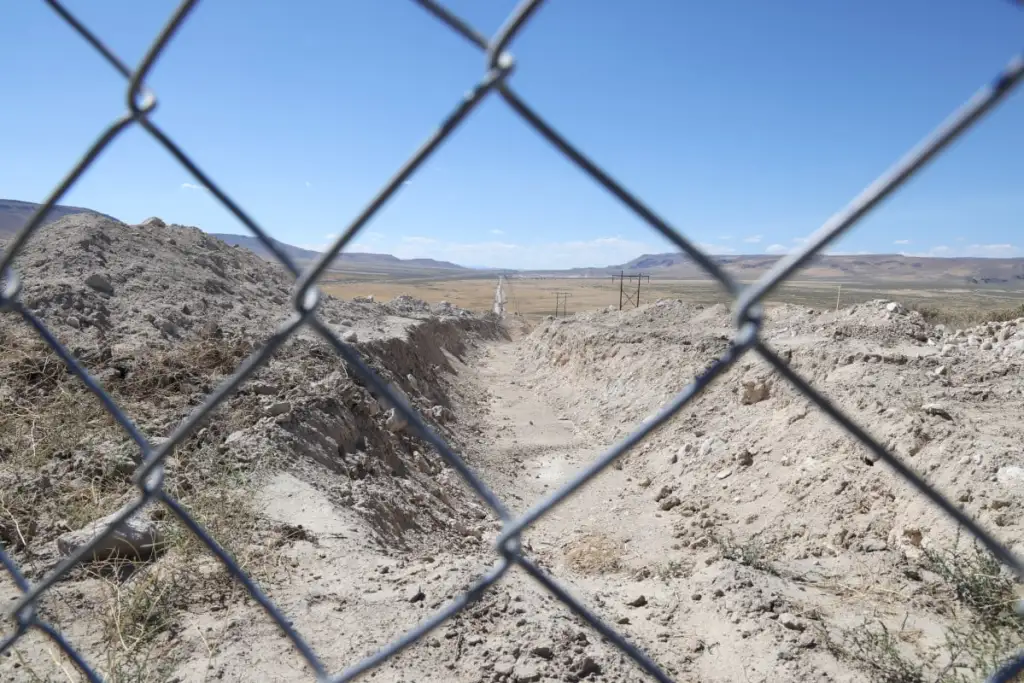
The Thacker Pass mine run by Lithium Americas is on track to become the second active lithium mine in the United States. The project in far northern Nevada may be indicative of what’s to come as more government-fueled mines pop up.
The lithium clay mine is under construction, with most Phase 1 construction costs covered by IRA support: General Motors is investing $650 million in exchange for the mine’s lithium. The U.S. Department of Energy provided a conditional $2.26 billion low-interest loan. Permitting came earlier, from President Trump’s administration. In 2028, the Thacker Pass mine is expected to reach full capacity production.
The DOE said the loan will provide General Motors with enough lithium for 800,000 electric vehicles a year and “reinforces the Biden-Harris Administration’s whole-of-government approach to strengthening America’s critical materials supply chain, which is essential to building America’s clean transportation future and enhancing our national and energy security.”
Lithium Americas plans to recycle and reuse withdrawn water an average of seven times. Its Phase 1 water consumption is estimated to be about 929 million gallons per year, equal to “around five alfalfa irrigation pivots,” according to the company’s blog.
Lithium Americas purchased existing agricultural water rights, so the operation won’t increase groundwater withdrawal, although existing groundwater withdrawal may still be unsustainable. It has also outlined plans for nearby habitat restoration. A post-mining reclamation plan is intended to reduce long-lived environmental impacts by refilling pits and restoring the surface.
But implementing and tracking mitigation strategies like these is left up to the companies.
“What I think is concerning is the proliferation of lots of voluntary governance mechanisms that companies don’t have to do,” says Riofrancos. “What’s important — and it sounds old-fashioned, maybe — is regulation that’s binding; that’s enforceable; that carries sanctions, fees, punishments, fines, whatever, if the regulations are not obeyed.”
Riofrancos believes such regulations, plus sustained protests against irresponsible mines, could get the mining industry to “do better.” She says the IRA-supported DOE loan program represents a missed opportunity to tie robust regulations to mining projects: “It’s very light on guardrails and requirements for loan recipients.”
It’s also unclear how much mitigation is realistically possible.
“There’s ways to tinker around the edges, but ultimately, there’s no mitigating an open-pit mine,” Donnelly, the Great Basin director of the Center for Biological Diversity, said in an interview. “(These mines) cause impacts to the water table, impacts to wildlife, impacts to local and Indigenous communities.”
He believes IRA loans and other federal subsidies help new mines get permitted in spite of environmental risks: “The DOE’s kind of waving a magic wand and saying, ‘This mine is okay to permit.’ ”
But the exact risks of each new lithium mine are tricky to measure. The three different types of mines can have different effects, depending on variables including location, says David Boutt, a hydrogeology researcher and professor at the University of Massachusetts-Amherst. Companies are often reluctant to share data that would help scientists evaluate impacts, he says.
“It’s hard to establish a number, like, ‘This one has like a 30% less environmental impact than the others,’ ” Boutt says. “We don’t see these numbers, because a lot of the impacts are local and hard to quantify.”
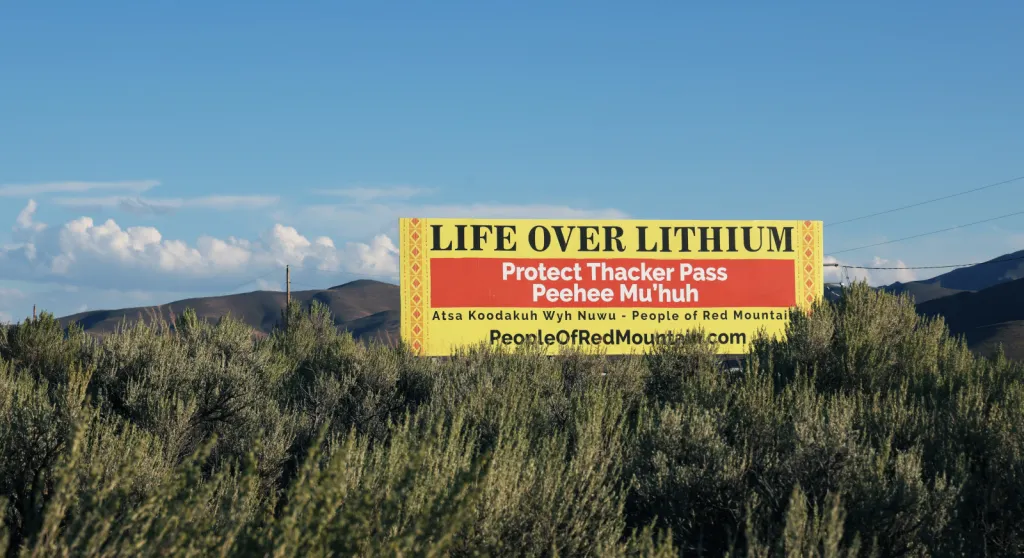
Yet for people living near mining sites, the risks can feel tangible. Dean Barlese, an elder from the Pyramid Lake Paiute Tribe, says he’s opposed to the Thacker Pass mine both because it’s at an Indigenous sacred site, and because his people’s lives are intertwined with the local ecosystem.
“A lot of people think it’s just a desert wasteland,” he says. “But the medicines we use are still out there. As Native people, we still gather our food, roots, berries — we’ve survived here for thousands of years.”
Barlese says he’d rather not see mining projects near Indigenous communities at all, regardless of community benefits agreements and environmental mitigation plans. “I would encourage the public to really look into the devastation that getting a bit of lithium does.”
Lithium demand could be reduced if investments were made in public transit and walkable communities, so fewer people were buying cars, Riofrancos says. Although the IRA includes investments in battery recycling, it doesn’t incentivize efforts to reduce surging lithium demand. Instead, it supports extraction to meet the demand, and helps ensure that the extracting companies can profit.
“ ‘Green energy’ is not green energy,” says Barlese. “Money speaks louder than anything else.”
Another possible solution to the mining debate would be an energy transition that uses less lithium.
“One way to reduce demand for lithium (or any battery metals) would be to make smaller batteries, or batteries that are more resource-efficient,” says Riofrancos. Two-thirds of current EV models are SUVs or large vehicles; small- and medium-sized EVs account for only a quarter of EV sales in the United States. Incentivizing smaller vehicles, which can use smaller batteries, could ultimately lead to fewer lithium mines.
Other battery chemistries are another option.
“Given the complexity of getting a permit, of getting the social license, of having everything in place, it’s going to take a long time (to open new mines),” says Boutt, the hydrogeologist. “And perhaps by the time we get to the point where we are developing those resources, we’ll have different battery technology where we’re not as reliant on lithium.”
Floodlight is a nonprofit newsroom that investigates the powerful interests stalling climate action.
SOLAR: Developers bring the 690 MW Gemini Solar + Energy Storage project online in southern Nevada, making it one of the nation’s largest operational facilities of its kind. (Power)
ALSO:
CLEAN ENERGY: Colorado economic development officials approve up to $1.84 million in tax incentives for a clean energy manufacturer considering establishing a facility in the state. (CPR)
STORAGE:
GRID: Distributed energy provider Sunrun says its virtual power plant composed of some 16,000 residential solar-plus-storage systems sent up to 51 MW to the California grid during a July heat wave. (news release)
MICROGRIDS: Colorado awards utilities more than $2.1 million to construct solar and battery storage powered microgrids. (Microgrid Knowledge)
OIL & GAS: The federal Bureau of Land Management proposes strengthening oil and gas drilling regulations on public land in Colorado to mitigate impacts to wildlife habitat. (news release)
ELECTRIC VEHICLES: California electric vehicle sales for the second quarter of 2024 drop 1.2% from the previous year, raising questions about whether the state can meet its goal of banning new gasoline-fueled car sales by 2035. (Los Angeles Times)
MINING: Advocates push back against a company’s plan to breed an endangered wildflower in a lab to offset its proposed Nevada lithium mine’s impacts to the plant, saying the firm is “greenwashing extinction.” (Associated Press)
NUCLEAR:
CARBON CAPTURE: Montana residents push back on an ExxonMobil subsidiary’s proposal to store 150 million tons of captured carbon in federal lands in the eastern part of the state, saying it would “change our way of life here forever.” (Inside Climate News)
The small southeastern Minnesota city of La Crescent receives just a handful of permit applications each year to install solar panels on homes.
Despite the small volume, it’s still important to city sustainability coordinator Jason Ludwigson that it’s a smooth process for homeowners and installers.
That’s why the city of 5,000 recently became one of the first in the state to start using a software program designed to streamline local solar permitting.
Solar Automated Permitting Plus, or SolarAPP+, was developed by the National Renewable Energy Laboratory (NREL) in collaboration with the solar industry, code organizations, local governments, and the building safety community. Since its release in 2018, SolarAPP+ has been used by more than 160 cities and counties to automate much of the permitting process for smaller solar installations.
In La Crescent, an application that might have taken a few days for a city employee to review can now be approved online in minutes for projects that meet criteria. That “will save (time) for both the contractor and the city,” Ludwigson said. “It makes it faster for our building and zoning department.”
Minnesota lawmakers want to encourage more communities to join La Crescent in adopting the software. This year, the Legislature budgeted $2 million for the Commerce Department to deliver programs and training to local agencies, contractors, inspectors and others involved in solar permitting.
The state’s solar industry association supports use of the software, in part for its potential to standardize a process that can right now vary significantly from city to city. Making it easier to permit installations could save companies time, potentially lowering costs and helping to expand rooftop solar in the state, which will need many megawatts more clean energy to reach its climate goals.
Getting permits for solar projects in Minnesota can take days or weeks and cost as much as $1,000. Typically, solar installers in the state apply electronically or in person for separate building, local electrical and utility interconnection permits. After receiving approvals for all three applications — and any other that are required — they start building projects that, once completed, are reviewed onsite by building and electrical inspectors.
Installers using the software receive automated approvals if they accurately complete forms for their building and electrical permits and, if required, fire and structural permits. Any errors are flagged and sent back to the installer for corrections. The app integrates with existing permitting software programs used by government agencies, according to NREL.
California cities have been the biggest adopters so far, but the app is beginning to catch on in Minnesota, Wisconsin and Iowa. By the end of 2023, the NREL reported that the free software had been used nationally on 32,800 projects, saving 33,000 hours of permitting staff time. Installers pay a $25 administrative fee and the community’s permitting fee.
State Rep. Patty Acomb, who chairs the Climate and Energy Finance and Policy committee, said she and other lawmakers want to provide state grants so cities can learn how to use the software and eventually create a consistent permitting process across the state. “The intention is to make (permitting) easy and predictable,” she said.
Lissa Pawlisch, director of the Energy Development Section at the state Department of Commerce, said the department is developing a program to reach out to communities interested in SolarAPP+ and assist them in incorporating it into existing permitting software. She also believes the app could play a role in helping move installations through the new federally funded Solar for All program that will serve low income households.
Great Plains Institute’s Brian Ross said that Solar for All requires a consistent approach to permitting, and that one way to achieve that is with the SolarApp+ software. The app would give a “jurisdictional consistency” to applications from low income solar customers and “to make sure there are not barriers in the way.”
Despite its promise the app will not work in every situation. It only incorporates local versions of electrical permits and not the state permit, which many communities use. “If the local government relies on the state permitting process (for instance, Minneapolis), then I don’t think there is any advantage to using SolarAPP because the state electric permitting process is already effectively an ‘automatic issue,'” he said.
Donna Pickard of TruNorth Solar has spent decades filing solar permits with dozens of municipalities. She said installers need building, electrical and interconnection permits and approvals before projects begin, often taking over a month.
Pickard wonders if SolarAPP+ will interest Minnesota communities because many already have established permitting systems to manage solar projects. However, having dealt with many different permitting structures, Pickard said she “likes the idea of standardization because it would make things easier.”
Another challenge is that the software can’t evaluate permits for projects on flat or metal roofs in the Midwest. Jeff Cook, solar analysis subprogram manager at the NREL Strategic Energy Analysis Center in Colorado, said the software covers about 80% of eligible solar installations but the number declines in the Midwest due to “high snow load and metal roof penetration.”
Pawlisch said outreach and grants for SolarApp+ would likely start next year. The start date is also unclear for Solar for All as she continues to meet with federal and state officials to work out the details.
BUILDINGS: In New Hampshire, a bill on the governor’s desk would update much of the state’s building code except for its energy efficiency provisions, leaving those at an earlier standard because of claims that home costs would rise. (NHPR)
ALSO:
WIND: As developers wait to learn the results of a multi-state offshore wind project solicitation, one developer strikes up memoranda of understanding with two Connecticut businesses for their services during construction. (The Day)
GRID:
FOSSIL FUELS:
NUCLEAR: Constellation Energy acknowledges amid speculation that it’s possible to restart unit 1 at Three Mile Island but that no decisions have been made. (WTAE)
SOLAR:
POLICY:
WORKFORCE: A $2 million federal grant will help a Maryland community development agency help expand the state’s energy efficiency workforce to make more upgrades at low-income households. (news release)
Correction: Starke County, Indiana, officials last week denied a claim by residents that documentation for a proposed solar project is missing. An earlier version of this digest incorrectly identified the county.
SOLAR: Two developers pursuing solar projects in Ohio are proactively meeting with communities early in the development process in an effort to boost their chances with state regulators. (Energy News Network)
ALSO:
EMISSIONS:
COAL: Northern Wisconsin coal plants are being replaced by natural gas and renewable energy as utilities prepare to comply with federal regulations. (WXPR)
GRID:
CLIMATE:
WIND:
HYDROELECTRIC: Hundreds of dams across the Upper Midwest are at growing risk of failure as they age and face more pressure from extreme weather. (Inside Climate News)
ELECTRIC VEHICLES: Professional racing league NASCAR, while still heavily reliant on internal combustion vehicles, releases a prototype all-electric race car at an event in Chicago. (Chicago Tribune)
COMMENTARY: A Wisconsin clean energy advocate says the state’s solar energy boom will provide an economic jolt to rural communities. (Door County Pulse)
CLEAN ENERGY: The Inflation Reduction Act has spurred billions of dollars in clean energy investment as it nears its second birthday, and forthcoming tax credit guidance is set to further accelerate its impact. (Utility Dive)
BUILDINGS:
OVERSIGHT: The Federal Energy Regulatory Commission started 2024 with only three of five commissioners but managed to enact major transmission, cost allocation and other rules in the first half of the year. (Utility Dive)
WORKFORCE: A $60 million federal program will fund nine training efforts across 10 states to prepare workers for climate resilience-boosting jobs. (Inside Climate News)
CLIMATE:
STORAGE: Residential and utility-scale energy storage development is off to a strong start this year, on pace to break development records. (Canary Media)
SOLAR:
ELECTRIC VEHICLES:
SOLAR: The Gila River Indian Community nears completion of a 1.3 MW solar installation over an irrigation canal in central Arizona. (Canary Media)
ALSO:
CARBON CAPTURE: A company proposes sequestering captured carbon under 605,000 acres of mostly federal land in southwestern Wyoming. (Cowboy State Daily)
CLIMATE:
UTILITIES: Hawaiian Electric plans to retire 88 MW of fossil fuel generation by 2030, citing aging facilities and tightening environmental regulations. (Maui Now)
GRID:
HYDROPOWER: California’s grid operator declares its first transmission emergency of the summer after a wildfire forces a key hydropower facility offline. (RTO Insider, subscription)
OIL & GAS:
COMMENTARY: A New Mexico advocate says state energy transition funding for a solar-powered irrigation pump for Indigenous farmers is “paving the way for a brighter future.” (Santa Fe New Mexican)
CLEAN ENERGY: Wisconsin has experienced a “monumental jump” in clean energy development under Gov. Tony Evers as Democrats have focused on its economic benefits rather than climate change. (Inside Climate News)
EMISSIONS: Federal regulators announce a record settlement with Marathon Oil, which will pay $241.5 million in penalties for various Clean Air Act violations in North Dakota. (Inforum)
NUCLEAR: Federal regulators begin the environmental review process as part of a company’s request to reopen a shuttered nuclear plant in southwestern Michigan. (Detroit News)
PIPELINES:
ELECTRIC VEHICLES:
SOLAR:
TRANSPORTATION: An Illinois county transit agency receives a $17.8 million federal grant to replace diesel buses with hybrid and compressed natural gas models. (Journal-Register)
CLIMATE: The Iowa Board of Regents approves a new climate change major at Iowa State University after a discussion about how the syllabus would not stifle students’ “free speech.” (Globe Gazette)
COMMENTARY:


.svg)
