

 Back
Back
A total of 112 gigawatts of batteries were deployed around the world in 2025 — 10 times the amount added just four years prior.
See more from Canary Media’s “Chart of the Week” column.
First came the solar. Now, the batteries have arrived.

Installations of grid batteries, which can store solar and other energy for later use, surged by 48% in 2025 from the year prior, per new data from BloombergNEF. A total of 112 gigawatts of battery storage capacity was installed worldwide in 2025 — a record high that represents a tenfold increase over the amount constructed in 2021.
So, where are all of these batteries sprouting up? The short answer: mostly in China and the United States.
China alone installed more than half of the world’s grid battery capacity last year. The U.S., meanwhile, accounted for 16%.
Other places are seeing rapid uptake, too. Sun-soaked Australia grew its battery installations by a factor of nearly six last year, albeit from a pretty small base of just 827 megawatts in 2024. The U.K., which shuttered its last coal plant in 2024, saw installations nearly double between 2024 and 2025, to 2.6 GW. Meanwhile, across the broader sub-Saharan Africa region, installations roughly quintupled to 4.3 GW.
Battery installations are now starting to catch up to solar installations, BNEF says. A decade ago, the world was installing 56 MW of solar for every 1 MW of storage. Last year, that ratio was 6-to-1. This year, BNEF expects it to drop to 4-to-1.
The key driver of this growth is the ever-decreasing cost of energy storage, with lithium-ion battery prices dropping by more than 90% over the last 15 years.
The case for batteries is also strengthening as the world builds an incredible amount of wind and solar, since the technology can stockpile wind and solar power when it’s abundant to dispatch later when the grid needs it.
BNEF expects the storage boom to continue as data centers surge onto the grid — especially in the U.S. — and as power demand rises because of the electrification of vehicles and buildings.
The firm forecasts that the world will install a total of 158 GW of batteries in 2026, resulting in 41% year-over-year growth. Although the pace tapers off a bit from there through 2030, BNEF projects that by the end of the decade, annual additions will top 200 GW — more than double the record-setting amount seen last year.
Distributed solar developers say they could build gigawatts of projects to help ease the state’s power crunch — if lawmakers and regulators set clear rules.
Pennsylvania needs more energy. Data centers are pushing demand skyward, utilities can’t build new capacity fast enough, and electric bills are on the rise. Medium-sized solar installations — smaller than utility-scale farms but larger than home rooftop arrays — could help ease the pressure.
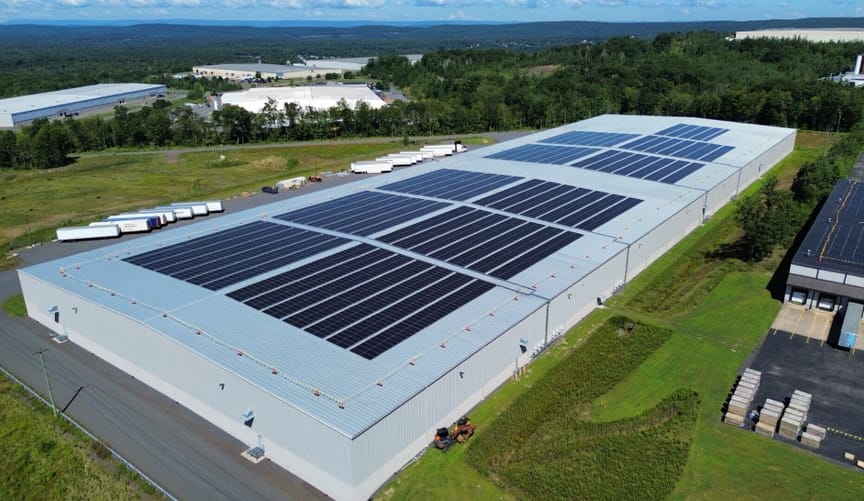
But state lawmakers, utilities, regulators, and solar developers are tussling over the rules that govern such installations, and it’s unclear whether new legislation to resolve their disputes will be passed this year. That worries Victoria Stulgis, president of Black Bear Energy.
Last month, her company and its partners celebrated the energization of 4.9 megawatts of solar on the roofs of two warehouses owned by EQT Real Estate in Mountain Top, Pennsylvania. The two projects, developed by Sigma Renewables and Scale Microgrids and managed by Black Bear Energy, are among roughly 2,100 mid-sized generation projects being planned in the state, most of them distributed solar.
What makes these projects possible is Pennsylvania’s Alternative Energy Portfolio Standards Act, a 2004 law allowing medium-sized projects that generate power with a range of technologies, from solar and wind to waste biomass and coal-bed methane, to earn a relatively high rate for the energy they feed to the grid.
After years of battling with utilities, solar developers won a 2021 decision from the Pennsylvania Supreme Court that laid the groundwork for a rapid expansion of mid-sized projects throughout the state.
But in the past few years, Pennsylvania utilities have cast a pall over that growth with a series of actions that could curtail the revenues these projects can earn, Stulgis said.
“Developers and institutional property owners have invested significant time and capital to develop these solar projects,” she said. Black Bear Energy has completed 15 megawatts of projects, has 22 more megawatts under construction, and has secured interconnection rights for another 106 megawatts across 34 projects, she said.
“Changing those rules midstream would undermine confidence and create real risk for projects already in development,” she said. “Some developers are still leaning in, believing there may be a viable path forward, while others are walking away from shovel-ready projects because of the uncertainty.”
Unlike neighboring states such as Maryland, New Jersey, and New York, Pennsylvania hasn’t adopted a program to enable community solar. Such projects are designed to provide enough revenue to spur third-party developers to build mid-sized solar arrays, to which utility customers can subscribe to lower their bills.
Instead, solar projects of up to 3 megawatts in Pennsylvania are compensated through net metering, a system that’s more commonly used with residential rooftop solar and other small-scale installations. The projects earn a close-to-retail rate for power they send to the grid, notably more than the wholesale rate that larger projects earn.
Solar developers argue that the existing rules allow businesses, school districts, public agencies, and farms to offset rapidly rising electricity costs by hosting solar projects. But utilities argue that paying close to retail rates for electricity from these arrays forces them to raise rates on the rest of their customer base — a version of the cost-shift argument that has dogged battles over rooftop solar net-metering programs over the past two decades.
The Pennsylvania Public Utilities Commission supports the utilities’ cost-shift argument. In March testimony before the state’s House Energy Committee, PUC Chair Stephen DeFrank said that costs from distributed generation projects moving through the interconnection process are projected to exceed $90 million per year by 2027, and could reach $700 million per year if the more than 2,100 projects seeking to be built “proceed under existing rules.”
If utilities aren’t able to recover those costs, they’ll have to increase other rates, he said. Those increases will be “first borne by commercial and industrial customers, including small businesses operating on narrow margins,” he said.
Advocates of distributed solar are pushing back against this cost-shift argument. Rather than increasing everyone’s utility bills, distributed solar will lower utility costs at large, they say, by bringing much-needed new clean generation to a state facing increasing electricity costs driven by the data center boom.
Those are the findings of an April report by Aurora Energy Research commissioned by community-solar developer Dimension Energy. The report analyzed whether building 2 gigawatts of distributed solar by 2030, a number that’s in line with current market growth, would reduce demand for power across the low-voltage distribution grids they’re connected to.
Aurora found that additional solar power could generate a total savings of $1.7 billion over the next 20 years, compared with a scenario under which it wasn’t built. Utilities would still need to pay those projects about $780 million over that time. But that would leave just under $1 billion in net savings that could be applied toward lowering utility customers’ energy bills.
“There are multiple mechanisms by which distributed solar can reduce costs,” said Zachary Edelen, a senior associate at Aurora.
For example, there is the roughly $1.2 billion over 20 years that Pennsylvania utilities could save in decreasing “capacity procurement obligations,” the costs they pay for resources to keep the grid running when demand for electricity peaks, he said. That change could make a substantial difference in Pennsylvania, which is part of PJM Interconnection, the grid operator serving 13 states and Washington, D.C.
PJM’s skyrocketing capacity costs have been a major factor in pushing up utility rates between 12% and 26% for customers of the state’s major utilities from December 2024 to December 2025. That has driven politicians including Pennsylvania Gov. Josh Shapiro (D) to demand reforms from both PJM and the state’s utilities.
Unlike California, Texas, and other states that are awash in solar and need more batteries to store it to lower summertime peak loads as the sun sets, Pennsylvania gets only about 1% of its electricity from solar, Edelen noted. Adding 2 gigawatts would bring that total to about 4% of the state’s total generation capacity.
That means there’s plenty of room for new solar to flow onto utility grids and reduce overall peak loads — especially during the late afternoon summer hours when PJM measures how much peak demand utilities have, and thus how much capacity they’ll need to procure.
These capacity cost reductions are the biggest source of savings from distributed solar, but not the only one, Edelen said. Aurora’s analysis found that 2 gigawatts of distributed solar could cut the cost of purchasing energy from other resources by about $250 million. And because that solar would provide power to nearby customers, it could cut roughly $200 million from future transmission grid expansions that would be needed to deliver power from large power plants farther away. Aurora also estimated that Pennsylvania could earn about $140 million in renewable energy credits from 2 gigawatts of solar.
And that’s not counting the environmental benefits. The state could reduce carbon emissions by more than 11.3 million metric tons and abate harmful air pollution by supplanting fossil-fueled generation with 2 gigawatts of distributed solar.
To be clear, utility-scale solar can deliver electricity at prices well below those being paid to mid-sized projects under the current Alternative Energy Portfolio Standards Act regime. Some energy experts agree with the utilities that policymakers should cut the rates paid to distributed solar systems and instead compensate them at the lower wholesale electricity prices earned by power plants and other competitive generators.
The problem with relying on utility-scale projects is that PJM’s notoriously backlogged interconnection process has made it difficult to add new generation capacity to its grid over the past half decade. PJM recently reopened its interconnection queue after a multiyear pause. But new projects are still expected to take several years to move through that process, and years more to win permits and secure financing to get online.
Distributed solar, by contrast, can be permitted, built, and interconnected to lower-voltage utility grids within a year or two, according to developers working in the region. That could make it one of the few options to prevent what PJM forecasts could be a regional shortfall in energy supplies as early as next summer.
“The reliability of our energy system is increasingly uncertain,” Elowyn Corby, Mid-Atlantic regional director with the nonprofit Vote Solar Action Fund, said in March testimony to the state House Energy Committee. Distributed solar is “one of the fastest, most cost-effective tools available to bring new supply online where it’s needed most, and ease pressure on an overstretched, under-supplied grid.”
Corby also noted that Pennsylvania’s unusual regulatory structure, unlike almost all other net-metering programs in the country, allows distributed solar systems to have little or no “on-site load” — meaning a solar array on a building or one constructed on open land could send all its power to grid instead of using the bulk of it to meet the host’s needs. This makes many of the projects being developed in the state more akin to “merchant” generators that compete with other power producers, lending weight to arguments that they should receive lower compensation.
“Thoughtful reform that addresses how excess generation is treated, and that draws a clear line between distributed generation intended primarily to meet on-site load and merchant generation where the aim is primarily to sell excess generation to the grid, is not an attack on solar — it is responsible stewardship of a valuable policy,” she said.
Pennsylvania lawmakers have proposed similar bills to draw that clear line — one in the Democratic-controlled House and one in the Republican-controlled Senate. Both bills would allow projects that have already been built or that had utility interconnection agreements before mid-2025 to retain existing payment structures, although they would give the Public Utilities Commission the option to cap the total number of projects that qualify.
For projects that don’t meet that cutoff, the bills would significantly cut the rates earned for power sent to the grid. But the bills would offer higher compensation for projects built on “preferred sites,” such as on warehouse rooftops and parking lot canopies, on abandoned mines and capped landfills, and adjacent to closed coal plants, as well as for systems that serve school facilities.
Brandon Smithwood, vice president of policy at community solar developer Dimension Energy, would like to see these kinds of reforms, but he’s not confident that lawmakers will pass a bill. If they don’t, the state will end up with a patchwork of rules. Different utilities around the state have been making changes to how they classify mid-sized projects and lowering the compensation they earn, and developers have been challenging those changes.
Smithwood thinks that solar advocates can reach compromises with individual utilities to preserve some room for the market to grow. He pointed to a settlement agreement reached in March — between utility PPL Electric Utilities, solar trade groups Coalition for Community Solar Access and Solar Energy Industries Association, and the Pennsylvania Office of Small Business Advocate — as a “workable outcome” for solar developers in the absence of legislative action. The settlement would allow up to 140 megawatts of projects to retain retail net-metering compensation for up to 10 years, and then impose a complex and likely lower compensation structure for projects beyond that cap.
But other distributed solar developers are pushing for the legislature’s bills to be passed into law to avoid rules that differ from utility to utility.
“We are asking for regulatory clarity through a legislative foundation with clear and protected rules and rates,” said David Riester, managing partner at Segue Sustainable Infrastructure, a solar and battery project investor. Segue has invested in a portfolio of roughly 250 megawatts of distributed solar projects in development across Pennsylvania, which, if completed, could represent roughly $500 million in infrastructure investment, he said.
That’s just a portion of the total capacity being targeted by developers in the state. “If the light went green tomorrow, I would put the over-under on 700 megawatts getting placed in service within a year, and up to 2 gigawatts by the end of next year,” he said. “There’s this huge supply of power that’s ready to build.”
Segue is considering putting more money into more projects in Pennsylvania, Riester said. But without some clarity from utility regulators or lawmakers on how much these distributed solar projects will be able to earn, “those investments are on hold,” he said.
The much-anticipated stock market debut netted $1.9B for Fervo, indicating strong investor interest in the around-the-clock, carbon-free promise of geothermal.
Fervo Energy, a startup that has pioneered new ways to produce electricity from the earth’s heat, is officially a publicly traded company. It’s the first next-generation geothermal firm to go public.

Today’s initial public offering netted the Houston-based Fervo about $1.9 billion and valued it at roughly $7.7 billion. The company had reportedly sought a much lower valuation of between $2 billion and $3 billion in January but eventually raised its target amid strong investor interest. Fervo secured nearly $2 billion in financing over the course of its nine years as a private firm.
“We are seeing demand grow in a way that we have not seen in the electricity sector in quite a long time,” said Sarah Jewett, Fervo’s senior vice president of strategy. “To come onto the scene at a time when we’re seeing that inflection point of demand, with proven technology… it’s a really welcome time for a story like ours.”
The debut is a major moment for geothermal energy, which can deliver carbon-free power around the clock but has remained a marginal source of electricity worldwide given its serious geological limitations. Fervo makes geothermal energy viable in far more places by harnessing horizontal drilling techniques borrowed from the oil-and-gas industry, for which its CEO and co-founder, Tim Latimer, previously worked.
Fervo’s upsized IPO reflects investor exuberance for any company promising to help meet gargantuan power demand from AI data centers. Fervo has particularly tight ties with Google, which is both an investor in and a customer of the firm. Meta has signed deals with two other advanced geothermal startups in recent years.
“Fervo going public reflects growing confidence in the ability of new geothermal technology to serve soaring electricity demand across the country,” John Coequyt, director of U.S. government affairs at clean energy think tank RMI, said in an email.
Fervo joins longtime geothermal leader Ormat on the public market. Ormat, which completed its IPO in 2004, has been building traditional geothermal power plants in the U.S. and beyond for decades, and it recently began expanding its focus to include “enhanced geothermal systems” like Fervo’s. Ormat saw its stock price climb steadily for years and then nearly double over the last year and change.
Fervo’s IPO comes months ahead of another expected milestone for the startup: the commissioning of its first-of-a-kind power plant in Utah. The development, dubbed Cape Station, broke ground in 2023 and is on track to start sending electricity to the grid in late 2026. A total of 500 megawatts are under construction at the site, but Fervo has the permits in place to quadruple that amount.
Fervo also plans to bring a 115-MW development in Nevada online by 2030, as part of its power purchase agreement with Google and utility NV Energy.
The $1.9 billion Fervo has raised with its IPO will help the company acquire new land and fund general operations — but, Jewett said, “in reality the majority of that money is going to go to project development.”
“We are very, very focused on deploying megawatts — and of course now we say gigawatts,” she said. “The majority of our equity raised today will go to that.”
In its IPO filing, Fervo identified a total of 3.65 gigawatts of power plant capacity that is under construction, ready to be built, or in advanced stages of development. The U.S. currently has roughly 4 GW of installed geothermal capacity.
Fervo’s success will depend on its ability to drive down the cost of the power it produces.
Phase 1 of the Cape Station project is set to deliver power at $7,000 per kilowatt, a price that is competitive with traditional and next-generation nuclear power but far higher than that of natural gas or renewables. Phase 2 of Cape Station, which is also now underway, will deliver power at $5,500 per kW, Jewett said. The company aims to slash that rate to $3,000 per kW.
Fervo has shown some ability to cut costs to date. Between 2022 and 2025, Fervo says it has reduced drilling times by about 75% and slashed per-foot drilling costs by about 70%, marking a significant achievement for the nascent industry. Those trends will need to hold up as the company completes larger-scale installations in the years to come.
Fervo expects to run a loss for “several years,” per its IPO document, as it spends more aggressively to build out its power plants. Its net loss was roughly $57.8 million last year, up from $41.1 million the year prior.
Revenue was a scant $138,000 last year — but Fervo’s IPO document says there is a lot more waiting in the wings. To date, it has signed 658 megawatts’ worth of binding power purchase agreements with major utility Southern California Edison, community choice aggregators, and firms like Google and Shell. That adds up to “approximately $7.2 billion in potential revenue backlog,” per the filing.
It also has an agreement in place with Google, whereby Fervo will give the tech giant the right of first refusal to purchase 3 GW of electricity from certain new projects, though Google itself is under no obligation to say yes. Either party can terminate the deal if no binding commitments have been made by March 2028.
Geothermal energy enjoys more bipartisan support in the U.S. than any other renewable energy source.
While President Donald Trump’s One Big Beautiful Bill Act sunset federal tax credits for solar and wind this July, those for geothermal were left intact. The fracking firm founded and formerly led by Energy Secretary Chris Wright invested in Fervo in 2022. Not one but two bipartisan pro-geothermal bills are under consideration in Congress right now.
And although the Trump administration continues to obstruct wind and solar projects on federal lands, next month the Interior Department is slated to auction off an additional 197,000 acres of land in New Mexico for geothermal energy development.
Maria Gallucci contributed reporting to this piece.
An update was made on May 13, 2026, to include comments from Sarah Jewett, Fervo’s senior vice president of strategy.
The tech giant signed a multiyear contract with Transaera, a startup with MIT roots, for next-gen heat pumps that will help reduce energy costs and emissions.
Amazon has signed a deal for a novel kind of rooftop heat pump that will provide all-electric heating, superefficient cooling, and cheaper energy bills at an undisclosed number of the company’s commercial buildings.
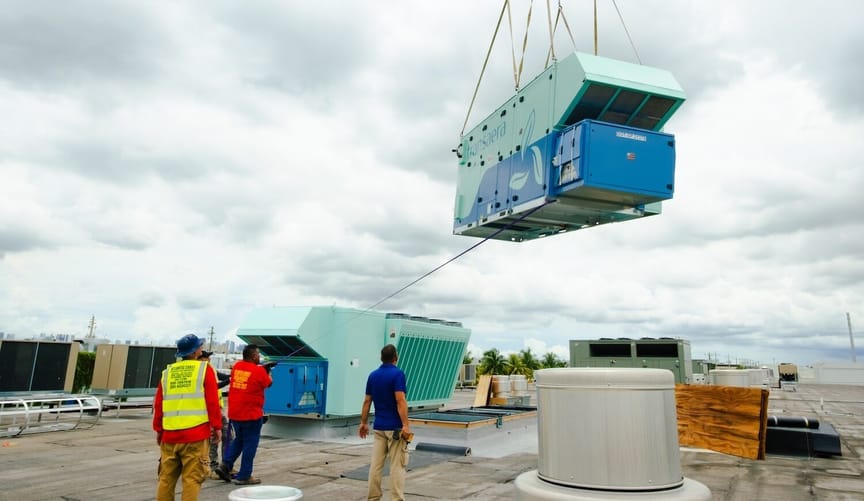
After a successful 6-month field trial at an Amazon logistics facility in hot and humid Houston, the tech behemoth signed a multiyear contract for the specially designed heat pumps with startup Transaera, based in Somerville, Massachusetts. Heat pumps are air conditioners that can work in reverse to provide emissions-free heating, too.
Amazon declined to reveal how many units it has ordered, what it’s paying, and where it would install them, but did say the heat pumps would help the company hit its target of net-zero emissions by 2040.
“At Amazon, we seek technologies that support our Climate Pledge goal,” Asad Jafry, the company’s director of global energy, sustainability, and automation, said in a statement. “This new collaboration supports expanding use of Transaera technology within our global network of buildings.”
Roughly 40% of energy used in U.S. commercial buildings — including big-box stores, schools, grocery shops, offices, hospitals, and hotels — goes to heating and cooling them. Typically performing those functions are packaged heating, ventilation, and air-conditioning units on rooftops. Think big white boxes on flat roofs.
The majority of those units in use today are gas-fired. Even though heat pumps are two to four times as efficient as gas systems, less than 15 percent of the 6 million or so commercial buildings in the country used the electric option in 2024, according to the U.S. Department of Energy.
Two years ago, the agency launched a public-private partnership to bring next-generation heat pumps to market by 2027. Despite the Trump administration’s war on efficiency, the program looks to be on track. And Transaera is one of the participants.
Noah Gabriel, project manager at the decarbonization nonprofit New Buildings Institute, called Amazon’s news “excellent.”
“Awareness of these technologies is still pretty low,” said Gabriel. “Anything that’s expanding from pilot to scaling is going to be really helpful for the market.”
At the Houston facility, Transaera’s tech proved its biggest selling point, according to Sorin Grama, the startup’s CEO and one of its three co-founders, all of whom studied or taught or did both at MIT: Their heat pump can cool buildings using 40% less energy than conventional systems do. The trick? Dehumidifying the air before cooling it.
Warm air “holds” more water than cold air. (Ah, physics.) So ACs naturally provide dehumidification. But conventional systems “typically have to overcool the air” to wring out excess moisture, which drives up energy costs, according to Ankit Kalanki, who leads global initiatives to turbocharge cooling tech for clean energy think tank RMI and has worked with Transaera in the past. (The startup is a member of the tech accelerator program Third Derivative, founded by RMI and the nonprofit New Energy Nexus.)
By midcentury, global demand for air conditioning is expected to nearly triple from 2022 levels, to a staggering 18,000 terawatt-hours, Kalanki noted. That’s more than the entire electricity demand of the U.S., China, India, Germany, and Japan combined.
Transaera’s heat pump could be “a huge game-changer,” Kalanki said. The more efficient electric tech gets, the more easily society can transition to 100% carbon-free energy on fewer solar, wind, and battery plants.
Like other rooftop heat pumps, Transaera’s product costs about 20% more than a conventional unit and has a payback of two to three years, Grama told Canary Media. A whole building equipped with these heat pumps, which last 10 to 15 years, could save millions of dollars over that period, he noted.
Making these efficiency gains possible is a Nobel Prize–winning class of materials: metal-organic frameworks. Under a microscope, they look like clumps of melded sugar cubes. While the material can have thousands of different chemical compositions, Transaera uses a proprietary recipe “that is really good at soaking up water molecules.”
The startup coats a thin layer of this hydrophilic framework on a wheel with a honeycomb structure that air can flow through, Grama explained. As the wheel spins, it sucks moisture from sodden outdoor air before it’s cooled, thus reducing energy use while delivering fresh, conditioned air to improve the health and comfort of a building’s occupants.
Transaera makes the dehumidification portion of the heat pump, and it partners with an unnamed U.S.-based manufacturer that builds the rest of the system. The startup has previously announced $15 million in seed and grant funding. In addition to Amazon, ProFood Properties has installed two Transaera heat pumps at its commercial kitchen in Hialeah, Florida.
Depending on demand, the startup plans to produce hundreds of units per year by 2028. Ultimately, Grama hopes to tailor the tech for individual households, too.
Transaera’s innovation, he said, “applies really well to any size of air conditioner.”
In early March 2026, the European Commission (EC) published a proposal for the Industrial Accelerator Act (IAA),[i] a wide-ranging regulation that would introduce local content and carbon intensity requirements in procurement and other public expenditures, establish a pre-approval regime for large foreign investments in strategic manufacturing sectors, and streamline permitting for industrial decarbonization projects across the European Union. If passed, the IAA would represent the EU’s most ambitious industrial policy since the European Green Deal, reflecting both a commitment to a low-carbon future and intensifying concerns about European competitiveness and supply chain resilience. The draft regulation’s preference for European producers and selected EU trading partners constitutes a softening of Brussels’ position on market neutrality—a shift that reflects a broader defensive turn in EU economic engagement driven by dysfunction in the multilateral trade system and concerns about a surging trade deficit with China.[ii]
This commentary unpacks the IAA’s core provisions, examines its implications for third countries, and identifies the open questions most likely to shape its final form and practical effect.
Relative to other leading economies, the EU has made limited use of fiscal incentives to shape industrial outcomes and structure supply chains since the end of the Cold War. The EU’s state aid rules, World Trade Organization (WTO) commitments, and decentralized allocation of trade, tax, and procurement authority across institutional actors have constrained its ability to pursue broad industrial policies on the scale of the Inflation Reduction Act (IRA) or Made in China 2025.
These constraints have come under increasing pressure in recent years. Russia’s invasion of Ukraine in 2022 exposed Europe’s dependence on imported fossil fuels and sent electricity prices soaring. Concurrent with the energy crisis in Europe, the United States passed the IRA, which authorized immense subsidies to the US energy and transportation sectors, further widening the gap between European and American costs of production.[iii] The crisis also coincided with a dramatic erosion of multilateral trade norms, driven by the United States’ unapologetic use of tariffs.[iv]
This confluence of economic headwinds has fueled anxieties in Europe about the EU’s industrial vitality. In response, EC President Ursula von der Leyen commissioned a report on European competitiveness from former European Central Bank President Mario Draghi.[v] The report, released in 2024, characterized Europe’s stalling economic growth as an “existential challenge” and called for a new industrial strategy based on massive investment and a more strategic use of trade policy to build resilient supply chains, reduce dependencies, and accelerate technological progress. This assessment strengthened an emerging consensus in Brussels that interventionist policies were necessary to secure the continent’s economic future.
The IAA is the EC’s most comprehensive response yet to the Draghi Report. It seeks to leverage some of Brussels’ most powerful economic instruments—procurement, market access, and energy regulation—to direct investment toward strategic sectors and technologies and to ensure that Europe’s energy transition does not undermine its technological innovation and economic resilience.
The IAA’s overarching objective is to strengthen the EU manufacturing sector’s competitiveness and resilience in support of European climate objectives. Specifically, it sets a goal for European manufacturing to account for at least 20 percent of EU GDP by 2035, compared to 14 percent in 2024.[vi] The regulation pursues this goal through four main instruments: local content and greenhouse gas intensity requirements, investment conditionality, permitting reform, and the designation industrial zones.
Local content, emissions intensity, and national security requirements for net-zero technologies and industrial goods
The most commercially significant of these instruments is a set of local content and low-carbon requirements applicable to products containing steel, aluminum, concrete, and mortar intended for use in buildings, infrastructure, and motor vehicles. These requirements would apply to both public procurement (i.e., government purchases, leases, and rentals) of those products and buildings and infrastructure construction projects that receive state support.
To meet the requirements, a specified share of the covered products being procured or used in construction must be “low carbon”[vii] and of “Union origin.”[viii] The IAA defines “low carbon” as goods that meet standards set out in the Ecodesign for Sustainable Products Regulation (2024) and the Construction Products Regulation (2024). It defines “Union origin” to include both European-made goods and those made in countries with which the EU has an FTA or a customs union agreement. In procurement contexts, the category also includes goods from countries that are party to the WTO Agreement on Government Procurement (GPA). The requirements differ by material: steel is subject to a low-carbon threshold, but not to origin conditions; concrete and mortar must meet a 5 percent low-carbon content threshold and be of Union origin; and aluminum must meet a 25 percent Union-origin and low-carbon requirement.
Alongside these new rules for energy-intensive commodities, the IAA includes Union-origin requirements and supply chain deconcentration measures for net-zero technologies. Most notably, the regulation would require that public procurement of electric vehicles (EVs) and consumer subsidies for EVs be limited to Union-origin vehicles. It would also impose Union-origin requirements on procurement of solar, wind, hydrogen, and battery energy storage systems products.
Finally, the IAA would build on the Net-Zero Industrial Act of 2024 (NZIA), which mandates the use of non-price criteria in public procurement and auctions relating to net-zero technologies. These criteria include sustainability and supply chain resilience, with the latter defined to encompass situations where a non-EU country accounts for more than 50 percent of a given technology in the European market. The IAA would further require that at least 40 percent of a member state’s auctions of such technologies meet the NZIA’s resilience and sustainability requirements.
These requirements are not unconditional. Authorities can set them aside where no compliant product is available, where meeting them would cause significant delays, or where the cheapest compliant option is more than 25 percent more expensive than the alternative in procurement or adds more than 30 percent to product costs in support schemes.[ix] Such opt-out thresholds are significant given current market conditions: Chinese producers enjoy structural advantages in sectors such as solar and batteries and the cost differential between Chinese and domestic alternatives is likely to fall within the opt-out band for many covered products.
In addition to these Union-origin and low-carbon provisions, the IAA would introduce a restrictive cybersecurity requirement applicable to certain technologies. For auctions and procurement involving net-zero technologies with control, supervisory control and data acquisition (SCADA), or remote access systems, suppliers identified as “high risk” under the EU’s forthcoming revised Cybersecurity Act are fully excluded.[x] That exclusion applies to 100 percent of relevant auction volume, not just the 40 percent or 8 gigawatt floor that governs the Union-origin requirements.[xi] Unlike the regulation’s Union-origin and low-carbon requirements, there is no cost opt-out available.
The application of these requirements to third-country suppliers depends on both the type of public intervention and the EU’s trade relationship with the supplier’s home country. In public procurement, the GPA[xii] provides a route to equivalence: suppliers from GPA member countries are treated as equivalent to EU producers. However, in renewable energy auctions and support schemes, equivalence is limited to countries that have free trade agreements (FTAs) with the EU.[xiii] This creates a two-tier system: GPA membership provides market access for procurement but not auctions, which account for nearly 60 percent of expected global utility-scale renewable capacity growth through 2030, according to the IEA.[xiv] Additionally, companies manufacturing in an EU-friendly country can still be excluded if they are ultimately owned by entities based in countries without a qualifying agreement.
Investment screening tools
The IAA also introduces a new pre-approval requirement for foreign investments above 100 million euros in sectors where the investor’s home country holds more than 40 percent of global manufacturing capacity.[xv] The proposal identifies four strategic manufacturing sectors: batteries and energy storage systems; electric vehicles; solar technologies; and critical minerals. To gain approval, investors must satisfy at least four of six conditions laid out in Table 1. The framework is designed to ensure that qualifying investments generate meaningful positive spillovers within the EU, rather than maintaining operational and technological capacity with a foreign parent.

Lastly, the regulation addresses two structural constraints on industrial investment that operate before any such commercial conditions arise. A reformed permitting regime, building on procedures originally established under the NZIA, would streamline approvals for a broad range of industrial decarbonization projects, reducing the administrative burden associated with creating and updating national facilities. Member states would also be required to designate an industrial acceleration area within twelve months of the regulation entering into force, with projects inside those zones benefiting from area-level environmental assessments and coordinated infrastructure planning.
The IAA’s investment conditionality regime is framed neutrally and without reference to individual countries. However, the trigger, a 40 percent global manufacturing capacity threshold, currently applies only to China across all four covered sectors.[xvi] Combined with the equivalence architecture described above, China’s position vis-à-vis the IAA is singular: it is neither a GPA party nor an EU FTA partner. As a result, Chinese suppliers face full Union-origin requirements across all intervention types, and Chinese investors face the conditionality regime without any exemptions.
Chinese producers could likewise be adversely affected by the IAA’s proposed amendments to the NZIA’s framework for evaluating tenders in public procurement and auctions. China dominates many of the technologies that would fall within the NZIA’s amended scope. As a result, bidders in European auctions and procurement tenders could face harsher scoring criteria or even disqualification if they propose to sell or deploy covered Chinese technologies.
Unsurprisingly, Chinese officials have voiced strong opposition to these and other aspects of the IAA. China’s Ministry of Commerce (MOFCOM) expressed “serious concerns” and warned it would pursue “countermeasures” if Brussels moves forward with the regulation.[xvii] MOFCOM identified the regulation’s mandatory technology transfers, local content requirements, and equity limits for third-country investors as potentially violating WTO commitments and destabilizing global supply chains, warning that the regulation creates “serious investment barriers and systemic discrimination.”[xviii] In response, EU Trade Commissioner Maroš Šefčovič pledged to “fight tooth and nail for every European job, for every European company, for every open sector.”[xix]
In order to become law, EC proposals must be reviewed and approved by the European Parliament and Council of the European Union, a process that usually results in substantial revisions to draft texts. As the IAA moves through this process, several areas are likely to be the focus of negotiations.
First, the inclusion of FTA and customs union partners and GPA parties in the preference schemes under the IAA may raise concerns that the regulation is insufficiently attuned to the needs and challenges of European industry. The EU has trade agreements with approximately 70 countries covering many of its major trading partners and is actively pursuing FTA negotiations with other large economies. This vast and expanding network may limit the IAA’s effectiveness as a tool to strengthen European competitiveness.
Second, the IAA’s investment conditionality rules may be viewed as too permissive by some European industrial and labor interests. Investor flexibility in meeting three of the five non-mandatory requirements under the regulation could result in an expanded foreign investment footprint in Europe’s industrial sector without substantial technology transfer or supply chain localization—particularly with respect to upstream inputs.
Third, the regulation’s expectation that foreign producers comply with EU standards and reporting requirements to qualify as “low carbon” may aggravate tensions about compliance costs precipitated by other trade and industrial policies such as the Carbon Border Adjustment Mechanism (CBAM) and Regulation on Deforestation-free products (EUDR). Many EU trading partners, particularly developing countries, have criticized the CBAM and EUDR as de facto protectionist, arguing that they condition access to the European market on onerous sustainability standards that are not well aligned with the economic realities of non-European economic and regulatory systems.[xx] For similar reasons, the IAA could be perceived as privileging EU-based firms and those of other advanced economies at the expense of the Global South.
Fourth, the regulation will undoubtedly raise concerns about inflation given current energy prices. Local content and emissions intensity requirements can increase input costs. Although the IAA includes opt-out provisions for situations where Union-origin products would be more expensive, those are set at thresholds that some producers may view as too high. A 20 percent increase in the cost of steel, for example, would not justify the opt-out provisions but could nonetheless significantly raise production costs.
Finally, the regulation’s consistency with multilateral trade norms is likely to face scrutiny. Local content requirements are generally disallowed under WTO rules, including in renewable energy contexts. A key question will be whether auctions to deploy net-zero technologies fall within the scope of the GPA or under exceptions in the Global Agreement on Tariffs and Trade and other WTO agreements. Existing trade jurisprudence does not provide clear guidance on this, and without further clarification the IAA is likely to be contested by one of Brussels’ non-FTA trading partners at the WTO.
The IAA reflects an emerging consensus in Brussels that carbon pricing and emissions standards, which have long been EU officials’ preferred decarbonization tools, may be insufficient to secure European industrial interests in a world where major competitors aggressively deploy fiscal and trade measures. As the IAA moves through the EU legislative process, European leaders will need to decide how much they are willing to intervene in the common market to safeguard the continent’s economic future.
Trevor Sutton, a Senior Research Associate at CGEP, focuses on the intersection of trade, climate, and industrial policy and leads the center’s Program on Trade and the Clean Energy Transition. Trevor previously served as Research Director of the Remaking Global Trade for a Sustainable Future Project and was a co-author of a seminar report on trade system reform, the Villars Framework for a Sustainable Trade System. He has also served in various roles at the Center for American Progress, most recently as a Senior Fellow for Energy and Environment, and the United Nations. Prior to these positions, Trevor served as a judicial clerk on the U.S. Court of Appeals for the District of Columbia Circuit. Trevor has a BA from Stanford University, a JD from Yale Law School, and an MPhil from Oxford University, where he was a Marshall Scholar.
Evelyne Williams is a Research Associate at Center on Global Energy Policy at Columbia University SIPA, where she focuses on the intersection of international trade, energy, and decarbonization. She most recently served as a Foreign Affairs Officer in the U.S. Department of State’s Office of Global Change, where she was the deputy lead negotiator on carbon pricing at the International Maritime Organization (IMO) and represented the United States in international climate negotiations under the UN Framework Convention on Climate Change (UNFCCC) and the Organisation for Economic Co-operation and Development (OECD).
A recipient of the State Department’s Colin Powell Leadership Program fellowship for emerging policy leaders, Evelyne also held roles at the U.S. Mission to the United Nations in New York, the Office of the Geographer and Global Issues, and the Humanitarian Information Unit, where she contributed to socio-economic and climate-related policy initiatives.
Raised in Puerto Rico and the U.S. Virgin Islands, Evelyne has a longstanding interest in island economies, economic policy, and climate resilience. As a student at Columbia, she led a property tax reform and infrastructure resilience initiative in Puerto Rico and collaborated on the development of a graduate course on international monetary policy with Professor Richard Clarida. Earlier in her career, she interned at the U.S. Department of Commerce’s International Trade Administration, supporting export strategies for U.S. firms.
Evelyne holds a Bachelor of Arts in Economics with Distinction from Barnard College, Columbia University, and has pursued a Master of International Affairs at Columbia’s School of International and Public Affairs.
Swad Sathe is a Research Associate at the Center on Global Energy Policy at Columbia University SIPA, where he focuses on researching the nexus between trade and energy. He also provides operational support, including project management and strategic communications, for the Trade and Clean Energy Transition Initiative. He most recently was a Climate Intern at the Niskanen Center in Washington D.C., where he conducted research and wrote articles on permitting reform, transmission expansion, and geothermal energy.
A master’s graduate in International Affairs from the George Washington University, Swad specialized in energy and environmental policy, which culminated in a capstone project on incorporating critical minerals into the USMCA. While in D.C., he also had internships with Observer Research Foundation America, a think tank specializing in U.S. – India relations, and the Climate Leadership Council, a think tank focused on market-based solutions to reduce global emissions.
Swad has a background in fintech, having worked at Sezzle, an alternate payments platform, for over four years. He led Strategic Partnerships at the Minneapolis-based startup, where he forged relationships with over 100 technology and platform partners, expanding the company’s presence in the eCommerce space. He also led CSR efforts, including Sezzle’s B Corp recertification process.
Swad also holds a Bachelor of Science in Economics from the University of Minnesota – Twin-Cities.
[i] European Commission, “Proposal for a Regulation of the European Parliament and of the Council on Establishing a Framework of Measures for Accelerating Industrial Capacity and Decarbonisation in Strategic Sectors (Industrial Accelerator Act),” COM(2026) 100 final, 2026/0068 (COD) (Brussels, March 4, 2026).
[ii] Carlo Martsucelli, “Europe-China Trade Deficit Widens,” Politico Europe, February 13, 2026, https://www.politico.eu/article/europe-china-trade-deficit-widens/;
DRM News, “Macron Warns China Is ‘Destroying European Industry’ without Strong EU Protection,” YouTube video, April 24, 2026, https://www.youtube.com/watch?v=zKTj5999BvY.
[iii] Inflation Reduction Act of 2022, Pub. L. 117-169, 117th Cong., 2nd sess. (August 16, 2022), https://www.congress.gov/bill/117th-congress/house-bill/5376/text; International Energy Agency, Energy Technology Perspectives 2024 (Paris: IEA, 2024), https://www.iea.org/reports/energy-technology-perspectives-2024.
[iv] Casey Crownhart, “China’s Energy Dominance in Three Charts,” MIT Technology Review, July 10, 2025, https://www.technologyreview.com/2025/07/10/1119941/china-energy-dominance-three-charts/; International Energy Agency, Energy Technology Perspectives 2024, chap. 6, https://www.iea.org/reports/energy-technology-perspectives-2024.
[v] Mario Draghi, The Future of European Competitiveness (Brussels: European Commission, September 2024), https://commission.europa.eu/topics/competitiveness/draghi-report_en.
[vi] World Bank, “Manufacturing, Value Added (% of GDP) — European Union,” World Development Indicators, accessed April 2026, https://data.worldbank.org/indicator/NV.IND.MANF.ZS?locations=EU.
[vii] Steel products are subject only to a low-carbon content requirement. The other covered goods are subject to both a low-carbon content and a Union-origin content requirement.
[viii] “Union origin” is a legal term relating to the national source of a product as determined under applicable EU regulations and trade agreements. Somewhat confusingly, it can be defined to include goods that are produced outside the European Union, as is the case under the IAA.
[ix] European Commission, “Proposal for a Regulation of the European Parliament and of the Council on Establishing a Framework of Measures for Accelerating Industrial Capacity and Decarbonisation in Strategic Sectors,” Article 11(3); Ibid., Article 12(3).
[x] Ibid., amended Article 26(1)(a)(iv) and Article 28b of the NZIA.
[xi] Ibid., amended Article 26(7) of the NZIA.
[xii] Office of the United States Trade Representative, “WTO Government Procurement Agreement,” accessed March 2026, https://ustr.gov/issue-areas/government-procurement/wto-government-procurement-agreement.
[xiii] European Commission, “Negotiations and Agreements,” accessed March 27, 2026, https://policy.trade.ec.europa.eu/eu-trade-relationships-country-and-region/negotiations-and-agreements_en.
[xiv] International Energy Agency, Renewables 2025: Executive Summary (Paris: International Energy Agency, 2025), https://www.iea.org/reports/renewables-2025/executive-summary.
[xv] European Commission, “Proposal for a Regulation of the European Parliament and of the Council on Establishing a Framework of Measures for Accelerating Industrial Capacity and Decarbonisation in Strategic Sectors,” Article 17(1).
[xvi] Ibid., Article 17.
[xvii] France24, “China Warns EU over ‘Made in Europe’ Plan, Vows Countermeasures,” April 27, 2026, https://www.france24.com/en/europe/20260427-china-warns-eu-made-in-europe-plan-countermeasures.
[xviii] Huan Zhu, “Beijing Labels EU Industrial Accelerator Act ‘Systemic Discrimination,’” China Trade Monitor, March 10, 2026, https://www.chinatrademonitor.com/beijing-labels-eu-industrial-accelerator-act-systemic-discrimination/.
[xix] Euronews, “EU Vows to Fight ‘Tooth and Nail’ for European Industry as China Threatens Retaliation,” April 30, 2024, https://www.euronews.com/my-europe/2026/04/30/eu-vows-to-fight-tooth-and-nail-for-european-jobs-as-china-threatens-retaliation.
[xx] Olivia Rumble and Andrew Gilder, “SA Calls CBAM ‘Policy Coercive’ and LDCs Call Them ‘Beggar Thy Neighbour’ Instruments,” African Climate Wire, July 24, 2023, https://africanclimatewire.org/2023/07/sa-calls-cbam-policy-coercive-and-ldcs-call-them-beggar-thy-neighbour-instruments/.
Red and blue states alike are working to transform abandoned wells from costly, polluting liabilities into sources of clean power and heat.
As states seek out much-needed supplies of clean, reliable energy, some are looking to an unconventional source: abandoned oil and gas wells harnessed for geothermal heat.
Millions of inactive wells are littered across the United States, the relics of earlier eras of fossil fuel production. A large number of the sites have no official owner, and many are still polluting groundwater and leaking heat-trapping methane. The country has barely scratched the surface in dealing with this problem.
Policymakers in both Republican- and Democratic-led states are exploring whether these sites could instead be converted into new wells for producing geothermal energy. The holes are already drilled in the ground, after all. And regions with widespread oil and gas development have rich subsurface data that geothermal firms need in order to determine where and how to build their carbon-free systems.
The concept is relatively new and largely untested, though scientists and startups are working to change that. States are also laying the groundwork for action by lifting regulatory hurdles and launching in-depth studies.
In Oklahoma, the state Senate is considering a bill that would create a process for companies to buy abandoned oil and gas wells and repurpose them for geothermal energy or underground energy storage. Oklahoma has identified over 20,000 such wells, and state regulators estimate that it would take 235 years and hundreds of millions of dollars to plug all of them. Fixing a single old well can cost anywhere from $75,000 to $150,000 or more, by some calculations, depending on where it’s located and how complicated it is to clean up.
The Well Repurposing Act, which passed Oklahoma’s House in March, is modeled after a similar law that New Mexico adopted last year to address its 2,000-plus orphan wells.
The Oklahoma bill “recognizes that these wells are a liability, and that there may be a way to turn them into some sort of revenue generation and give them value,” said Dave Tragethon, communications director for the nonprofit Well Done Foundation, which works to find and cap abandoned oil and gas wells nationwide. “And if there’s value, that means there’s more of a willingness to address them and more of an opportunity to raise funding.”
In Alabama, legislators passed a law last month that allows the state to approve and regulate the conversion of oil and gas wells to tap alternative energy resources like geothermal. North Dakota adopted a bill last year requiring a legislative council to study the feasibility of using nonproductive wells to generate geothermal power. And in Colorado, state agencies just launched a technical study to evaluate the potential of repurposing old wells for geothermal development and carbon capture and sequestration.
These efforts reflect the growing bipartisan support for geothermal energy, which has largely remained unscathed by the Trump administration’s efforts to block renewable energy projects. The energy resource has the potential to help meet the nation’s soaring energy demand while also slashing planet-warming emissions from electricity and heating.
Geothermal systems work by circulating fluids underground to capture naturally occurring heat, which can then be used to drive turbines for generating electricity or to directly warm the air and water in buildings. The industry is gaining momentum thanks to recent advances in drilling methods and technologies that are making it technically possible or financially viable to access geothermal energy in more places.
Many of those breakthroughs have come from the oil and gas industry, whose skilled workforce of drilling engineers and geoscientists, and deep corporate pockets, have helped launch startups and deploy cutting-edge systems. However, most of that expertise and funding are being poured into building new projects — not figuring out how to retool leaky wells left behind by earlier generations.
“Oil and gas well conversion presents an enormous opportunity, … but it’s pretty far away technologically from being a reality,” said Emily Pope, a geologist and senior fellow at the Center for Climate and Energy Solutions who authored a recent study on next-generation geothermal power.
“There are some hurdles that are still pretty immense,” she said, adding that “it is worth doing some R&D to try and grow.”

One of the biggest challenges is the fact that oil and gas wells tend to reach relatively low to medium underground temperatures. But high heat is key for geothermal projects, especially ones that generate electricity. The hotter the resource, the more energy a developer can wring out of the system.
Plus, fossil fuel wells generally produce smaller volumes of liquid and gas than geothermal wells need in order to spin power turbines or transfer heat to buildings. Geothermal operators might also have to take extra steps to keep nasty elements in the subsurface reservoirs from mixing with the working fluids used to extract heat underground, said Arash Dahi Taleghani, an engineering professor with the Repurposing Center for Energy Transition at Pennsylvania State University.
He added that the high cost of converting wells to geothermal has limited the number of real-world examples so far.
At the University of Oklahoma, however, researchers have been evaluating how to turn four old oil and gas wells into sources of geothermal heat, which they hope to pipe into nearby public schools and homes in the city of Tuttle. The project was awarded a $1.7 million grant from the U.S. Department of Energy’s Wells of Opportunity program in 2022, though it was paused last year during the Trump administration’s sweeping freeze on federal funding and is still waiting to start its next phase, KGOU reported in March.
Saeed Salehi was the Oklahoma project’s director before joining Southern Methodist University as an engineering professor in 2024. He said that repurposing wells for geothermal has several “clear advantages.”
Geothermal firms can avoid significant upfront drilling costs if the wells are already sufficiently deep and hot enough. Oil and gas firms, which today pay millions of dollars to properly seal and shut down modern wells, can give their assets a second life instead. And communities near the aging fossil fuel infrastructure could benefit from having clean, affordable heat and lower winter utility bills.
“We need to collect enough data and have enough successful projects … to take it to scale,” Salehi said, calling repurposed wells “a custom solution for specific regions and areas.”
“Everything is going to take time, but I think we are moving in the right direction,” he added.
A smoother permitting process will be key to speeding things up, something Oklahoma, Alabama, and other states are aiming to address. States have traditionally lacked any regulatory framework for dealing with decades-old wells that no one is technically responsible for. Salehi said it took nearly nine months to get the Tuttle project’s permits, though the process is growing faster now.
In Pennsylvania, Dahi Taleghani said his team is looking to secure funding to repurpose old wells to supply the Penn State campus with geothermal heating. They have also studied the potential for using some of the state’s more than 200,000 abandoned wells to heat agricultural greenhouses, as well as to house energy-storage systems that compress air and stash it underground, acting as low-cost grid batteries.
“Decommissioning wells is expensive, costly, and it’s not generating any revenue,” Dahi Taleghani said. “So we’re looking to [help] create businesses that can go after these leaky wells, fix them, and then use them for geothermal applications.”
AvalonBay saved big and cut pollution by outfitting apartments with tech that runs HVAC equipment more efficiently. Now the firm is scaling the strategy nationwide.
New York City’s biggest buildings face a huge change: By 2050, they must reduce their planet-warming pollution to net-zero, thanks to the metropolis’s Local Law 97. In other words, tens of thousands of structures will need to yank out fossil-fueled systems that heat water and spaces, and replace them with zero-emissions electric versions.

But that doesn’t mean buildings can’t start using their existing natural gas boilers and furnaces more efficiently in the meantime, both to cut utility bills and to comply with Local Law 97’s interim emissions-reduction targets. That’s the approach taken by AvalonBay Communities, one of the country’s largest multifamily real estate investment trusts.
The company partnered with startup Parity in 2022 to install indoor temperature sensors across three of its buildings in Midtown Manhattan, and to hook up the buildings’ heating, ventilation, and air-conditioning controls to a digital platform created by Parity. The software takes in data from the sensors, weather forecasts, and other inputs, and uses it to minimize gas and electricity consumption while ensuring individual apartments don’t get too hot or too cold.
The project cost AvalonBay about $280,000 to implement in the three buildings but has saved more than $540,000 in utility costs so far, according to the companies — more than double its initial targets.
“We blew the projections out of the water,” said Alexander Heckman, AvalonBay’s senior director of engineering. That allowed the firm to break even on its investment in about 16 months.
The company is now rolling out Parity’s tech to all its New York City high-rises, and plans to deploy it across about 4.5 million square feet of its properties on the East Coast, as well as in select West Coast markets, said Freddy Boateng, AvalonBay’s senior manager of sustainability and decarbonization. On Monday, the companies won a 2026 Better Project Award from the U.S. Department of Energy, which recognizes innovative energy-management efforts.
Importantly, while about 40% of the financial savings from the three Midtown buildings came from using electricity more efficiently for summertime air conditioning, 60% came from burning less gas, according to Parity data. That helped cut on-site carbon dioxide pollution by more than 1,000 metric tons so far — a big deal because Local Law 97 requires most buildings over 25,000 square feet to cut emissions 40% by 2030, compared with 2005 levels, in addition to the 2050 net-zero target.
Modulating the operating cycles of fossil-fueled boilers in big apartment buildings isn’t nearly as simple as remote-controlling individual apartments’ air conditioning, Heckman said.
In AvalonBay’s Midtown buildings, both cooling and heating are delivered via packaged terminal air-conditioning units in each apartment. The air conditioning in those wall-mounted boxes can be throttled up and down with the flip of an electrical switch, so to speak. But the heating coils within them are part of a system fed by boilers in the basement and pumps, valves, and other mechanical systems that move steam or hot water throughout the building.
Building managers mess with those systems at their peril. As apartment tenants adjust their preferred heating levels up and down, more steam or hot water is needed to meet those demands. Skimping on burning enough gas at the boiler to provide the temperatures those tenants want when they want them is a recipe for complaints or violations of city regulations.
That’s why almost all central steam and hot-water systems are designed and operated to err on the side of overheating, said James Hannah, Parity’s chief operating officer. The company has seen this over and over in the roughly 100 million square feet of multifamily buildings and hotels in which it has deployed its software across East Coast cities, including New York, Baltimore, Boston, Toronto, and Washington, D.C., and more recently in California and Washington state.
Parity solves this problem by incorporating “weather data for what the temperature is outside and what it’s going to be in the near future, so we can understand what the demand is likely to be in the near future, and optimize the run time of the boiler,” Hannah said. “There’s a lot of room for buildings that have these systems to go from a baseline to the cutting edge of control optimization, which is where we’d like to think we are.”
A prime opportunity is when days veer from chilly to warm. “It might be 20 to 25 degrees one day, and the next day — or even later that day — it might be 45 to 50 degrees. That represents a huge swing in heating demand,” he said.
Most apartments aren’t set up to adjust for those changing weather conditions, he noted. In New York City, the best-known example is older structures with steam radiators that often overheat apartments even on the coldest winter days. But more modern buildings still tend to run their automated HVAC systems on simple schedules that don’t take real-time weather data into account, he said.
Parity is far from the only company using software and data to make building HVAC systems run more efficiently. Dozens of major companies retrofit and manage energy use for governments, schools, universities, and hospitals, which can recoup the cost of efficiency investments over longer periods of time. Meanwhile, companies like BrainBox AI target HVAC optimization for office buildings.
Hannah said that what differentiates Parity from many competitors is its focus on multifamily buildings and hotels, which typically have fewer employees. “In big apartment buildings — and we’re finding similar issues in hotels — you don’t have a big, robust engineering staff like you’d find with a Class A commercial building or a hospital or campus. You can’t go to market with a complex system that requires the on-site team to do a lot of stuff manually,” he said.
Parity’s tech is also helping AvalonBay tap into a new revenue stream: The real estate company is using the software to participate in utility programs that pay customers to turn down power use during times when electricity demand threatens to exceed supply, Hannah said. AvalonBay earned about $30,000 last year by using less electricity for AC during summer heat waves.
Then there are the savings that come from avoiding penalties for failing to meet building performance standards. AvalonBay estimated that using Parity’s software in its three Midtown buildings will help it avoid a potential $290,000 in fines or mitigation costs to comply with Local Law 97. The software could help its buildings comply with similar regulations in Boston, D.C., and other markets.
There’s a lot more room for this kind of optimization. About 40% of the more than 30 million multifamily housing units in the U.S. were heated with fossil fuels as of 2020, according to the Energy Information Administration. But increasing efficiency has its limits: In cities and states that have mandated an end to carbon emissions, those buildings will eventually have to switch to all-electric heating or alternative fuels.
In the late 20th century, a handful of countries — led by Brazil and the United States — turned to liquid biofuels to reduce their dependence on foreign oil markets, producing transport fuels from cheap crops instead.
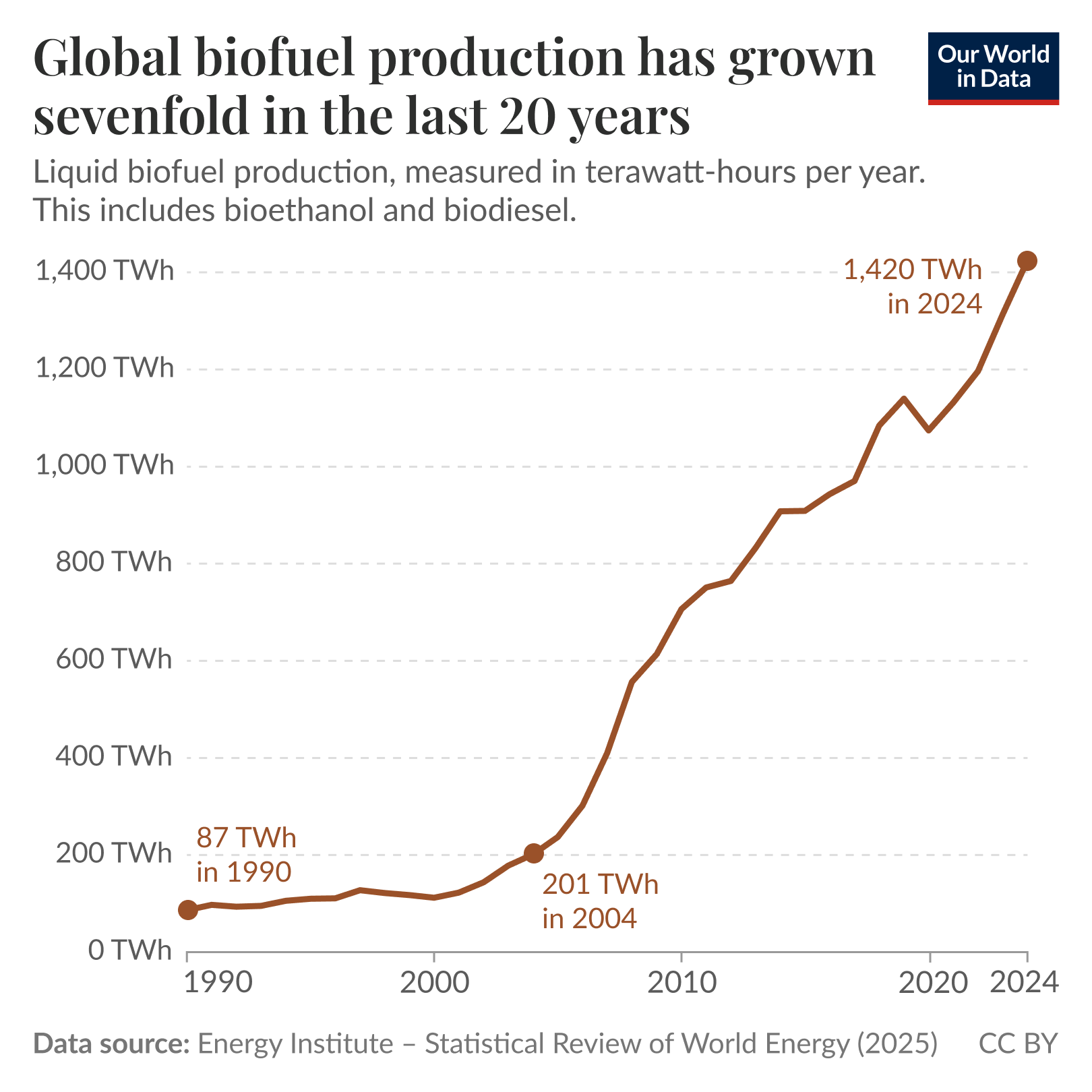
In the early 2000s, interest in biofuels ramped up sharply, and not just in the Americas. They came to be seen as a leading method to decarbonize road transport. This was because today’s alternative to the combustion engine, the electric car, was still far too expensive.
Over the last two decades, global liquid biofuel production has grown sevenfold, as the chart shows.
Electric vehicles are now far cheaper and, in some places, cost-competitive with petrol cars, so biofuels are no longer seen as the central answer to low-carbon transport.
Yet, the world produces more of them than ever, and this is expected to grow over the coming decade, largely due to fuel standards and national policies that have promoted them.
The share of power generated by wind and solar exceeded 30% in over a dozen states in 2025, which was a banner year for renewables even amid Trump’s attacks.
Quick — ignore the map above and take a guess: Which three states get the highest share of their power from wind and solar?

If you said Iowa, South Dakota, and New Mexico, well done. If you had Texas or California in there, fair enough — but neither of those clean-energy behemoths made it onto the podium, per the latest report from trade group American Clean Power Association.
Of the electricity produced in Iowa last year, 61% came from wind and solar — and pretty much all of that was wind. For decades, the state has been a leader on wind energy, though in recent years, development of new projects has dried up because of mounting local opposition and the Trump administration’s broader attacks on renewable energy.
South Dakota is a similar story, at 59%. Consistently gusty weather and ample land have led the state to install lots of wind turbines, and solar is scant in comparison.
New Mexico, which got about half its electricity from wind and solar in 2025, is a bit more balanced. Wind accounted for 36% of its power, and solar for 17%. The state is also a leader in grid batteries, which it is building out quickly to save more renewable energy for periods when the sun isn’t shining and the wind isn’t blowing.
The leaderboard could soon change as some states charge toward ambitious 2030 clean energy targets. California, for one, saw a massive leap in renewable energy production last year, with solar and wind accounting for 44% of its generation. The year before, that figure was 38%.
In total, 13 states generated more than 30% of their electricity from wind and solar last year, and the clean energy sources provided 17% of the nation’s grid-scale electricity overall — a new record.
Wind and solar are growing in the U.S. despite fierce opposition from the Trump administration, which has ripped away tax credits and slow-rolled or withheld permits for dozens of gigawatts’ worth of projects.
The reason for the sector’s ascent is simple. As electricity demand and utility bills spike, solar and wind — along with batteries — are cheap and fast ways to get more power flowing. The same cannot be said for coal plants (which are expensive to run) or natural gas facilities (which take a long time to build because of an equipment supply crunch).
These facts add up to one outcome: Solar and wind will keep rising to new heights in states across the nation.
Facing new regulations and stiff competition from China, Sweden and other EU countries are racing to decarbonize steel production. It all hinges on green hydrogen.
In 1872, while on a trip to Europe, Andrew Carnegie met with an engineer and inventor named Henry Bessemer. During the Crimean War, Bessemer had accidentally discovered an efficient (for the time) new method of making steel, which involved blowing air through molten iron to remove its impurities. He later developed it into a process that a few small steelworks had already adopted by the time of Carnegie’s visit. Carnegie had been following Bessemer’s invention from the U.S., but none of the steelworks employing it there had really taken off. The future titan of industry was nonetheless wowed by the older man’s presentation, and returned home convinced that steelmaking should be his next venture.
There was no doubt as to where to make such an investment. Manufacturing steel required huge volumes of iron ore and coal, and both were abundant around Pittsburgh. The city also enjoyed an advantageous location for transporting the heavy end product by barge. The Allegheny and Monongahela rivers merge there into the Ohio, down which one can navigate to the Mississippi and the Gulf of Mexico. Plus, Carnegie had a ready customer in the expanding railroad industry and political help in the form of a recently enacted steep tariff on imported rails. So, the Edgar Thomson Steel Works was erected in 1875, 10 miles outside Pittsburgh, in Braddock. (The thing is still running.)
One hundred fifty years later, a similar confluence of circumstances can be found nearly 100 kilometers (62 miles) south of the Arctic Circle, in Luleå, Sweden — one that could lead to the next big innovation in steelmaking. In 1872, no one knew, or cared, that Bessemer’s method was actually carbon manufacture with a side hustle in steel: Even in today’s furnaces, 1.8 metric tons of carbon dioxide are emitted for every ton of steel, give or take. But now, a new, cleaner method of steelmaking exists. It involves using hydrogen instead of coal to produce iron from iron ore in a process called direct reduction, then fashioning that iron into steel in an electric arc furnace.
When renewable electricity powers the hydrogen production and the electric arc furnace, the CO₂ per metric ton of steel in direct and indirect emissions can be reduced to 0.4 metric tons — about 80% less than from the most efficient methods developed since Bessemer’s time.
Hybrit Development, a joint venture of the Swedish companies LKAB (iron ore mining), SSAB (iron and steel production), and Vattenfall (energy), is developing an end-to-end process for steelmaking using hydrogen in Luleå. The group opened a pilot plant in 2020 and is working to build its first commercial-scale plant. Stegra, another Swedish startup, is aiming to do the same thing about 40 kilometers (25 miles) north, in Boden.
Much like the Pittsburgh area in the 1800s, northern Sweden enjoys certain geographical advantages: a surplus of hydropower, enormous iron ore mines 250 kilometers (155 miles) to the north, and a thriving seaport.
Sweden is also getting a nudge from the European Union, which aims to make Europe the first carbon-neutral continent by 2050. Starting this year, the steel industry across the 27 member states has to start paying for its emissions under the EU Emissions Trading System — the allowances initially granted to give it time to adjust are being phased out. The new regulations will sink its business model.
Germany, Norway, and other European countries are making similar efforts to decarbonize steel production, and as with many things concerning the energy transition, China is leaping ahead. The world’s largest ironmaking plant fueled by hydrogen started operating at full capacity late last year in Zhanjiang City, Guangdong. The U.S., meanwhile (as with many things concerning the energy transition), lags behind. The Biden administration sought to spur green hydrogen projects with tax credits and subsidies, but since January 2025, President Donald Trump has killed $12.5 billion in federal funding for clean energy projects — including some in green hydrogen — and threatened to scrap an additional $12.2 billion in existing grants. (SSAB was behind one of those projects, in Mississippi, but — perhaps seeing the writing on the wall — it quit the subsidy award process just before Trump took office and says it has no plans to try again in the U.S.)
With more than 300,000 jobs and 152 billion euros in economic activity tied to the EU’s steel industry, the stakes are high for Europe in the global race to decarbonize steel. And given the industry’s 5% contribution to overall bloc emissions, if it succeeds, the benefit to the climate will be enormous.
The hulking, rusting blast furnace that greets visitors just inside the gate of SSAB’s Luleå facility is a working remnant of traditional steelmaking. A short drive across the 265-hectare (1-square-mile) site follows the route of an elevated conveyor belt connecting the coking plant, where coal is cooked down, to the blast furnace. The road continues on to the building that houses Hybrit’s direct-reduced-iron demonstration plant. At 50 meters (164 feet) high, it’s about as tall as the blast furnace, but the similarities end there. The demonstration plant’s right angles and light-gray aluminum siding stand in stark contrast to the older structure’s tangle of rusted, ashen cylinders and beams.
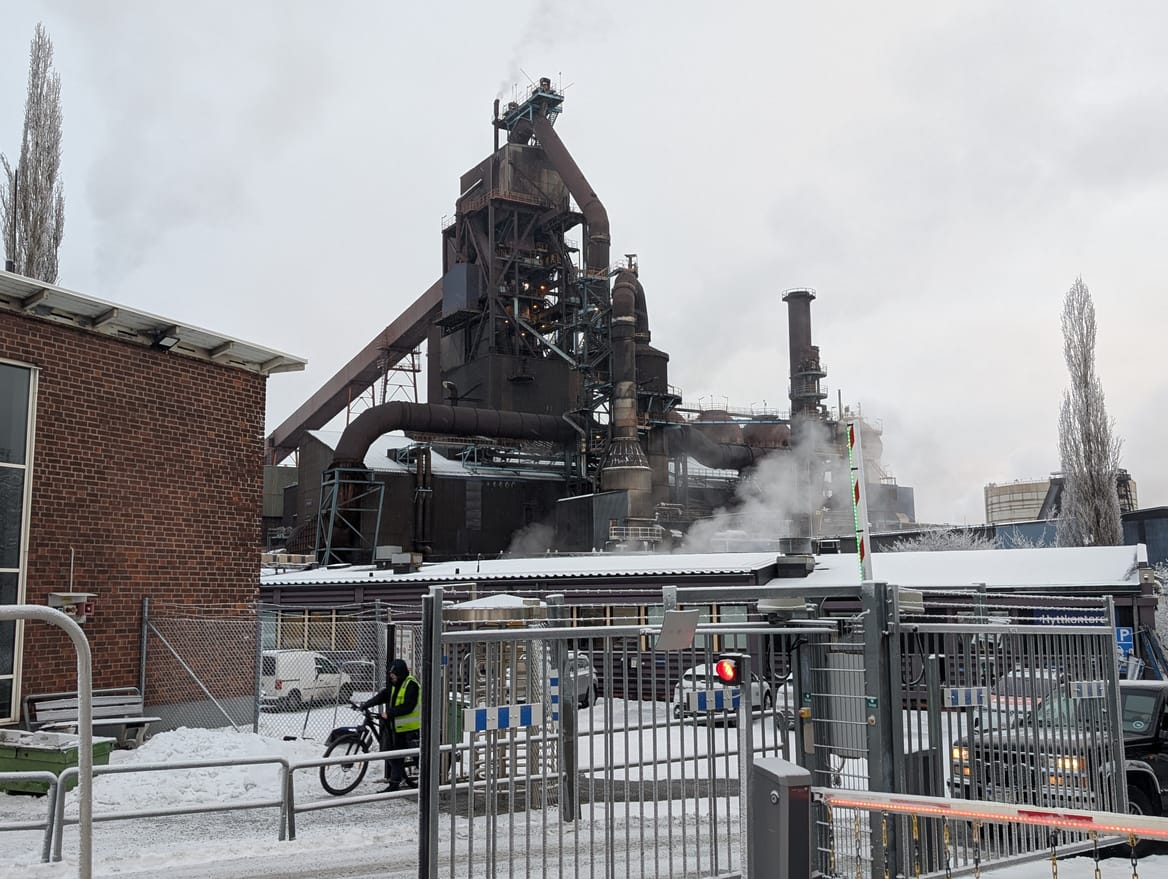
General Manager Gunilla Hyllander met me in the parking lot that divides the demonstration plant from Hybrit’s administration building. Just inside the door to the offices, a loose pile of employees’ shoes dripped snow — though at minus 11 degrees Celsius (12°F), it was almost balmy for January in northern Sweden. We sat down in a large room with samples of iron made in the DRI plant laid out on tables. Though the facility wasn’t in operation that day, Hyllander could see the future starting to take shape.
“Hydrogen reduction in itself is not new,” she said. “People have been thinking about that for years. But in an efficient, safe, and productive manner? That has not been proven before. We think that all the processes from mine to steel could be converted to a fossil-free manner. We’re using all existing technologies and putting it together in a new value chain.”
Steel has been produced on this site since the 1940s, originally by Norrbottens Järnverk. In 1978, Sweden’s government decided to socialize the country’s steel industry by merging Norrbottens and two other struggling companies under state ownership, as Svenskt Stål AB (Swedish Steel Ltd.). SSAB reprivatized in 1992, though the government now owns a 16% share. A major investment in the Luleå operation came in 1998, when the company built the current blast furnace at a cost of 850 million kronor (around $150 million, inflation-adjusted). That timing is significant. A blast furnace requires major maintenance about every 15 years. After relining its facility once, SSAB realized that by 2030 at the latest, it would need to either make that investment again, which would mean producing 7% of the country’s carbon emissions even after the carbon allowances had expired, or figure out a way to do things differently. The company took the second path, banding together with LKAB and Vattenfall to form Hybrit — short for “hydrogen breakthrough ironmaking technology” — in 2016.
SSAB’s decarbonization challenge is a microcosm of the European steel industry’s. It’s going to be a heavy lift. The company’s gigantic share of Sweden’s carbon emissions is no outlier. Globally, the sector produces about 7% to 9% of anthropogenic CO₂ emissions, according to the World Steel Association — about the same as all the world’s passenger vehicles — and accounts for over a quarter of the EU’s industrial emissions. Demand for steel is projected to grow by nearly 20% by 2050, according to BloombergNEF.
The traditional steelmaking process that Carnegie helped popularize primarily emits carbon in two ways: First, coal is burned as fuel to heat blast furnaces to above 1,000°C (1,832°F). Second, a purified form of coal, called “coke,” is heated inside the furnace to induce a necessary chemical reaction that strips oxygen from iron ore (the “reduction”), producing iron and — the second emission — releasing CO₂.

Hydrogen-based direct reduction addresses both problems. Instead of carbon, hydrogen serves as the reducing agent for the iron, combining with oxygen to produce water vapor instead of CO₂. The process operates at lower temperatures than blast furnaces do, requiring less energy. When that energy comes from renewables and the hydrogen is produced from electrolyzers — machines that split hydrogen from water — powered by wind or solar, the result is near-zero emissions. “In the development program, we are close to zero CO₂ emissions per tonne of crude steel — 42 kilograms, instead of 1.6 tonnes,” Hyllander said.
Direct reduction with natural gas has been used in commercial operations for decades, particularly in the Middle East and India, where cheap gas has historically been abundant. What’s changing now is the fuel source. Hybrit started with natural gas to establish a baseline for emissions, but in 2021 it began producing hydrogen with two stacks of electrolyzers. Situated behind the DRI plant, the electrolyzers aren’t much to look at. With their cylindrical shape and multiple rubber tubes, they resemble sewage pipes on life support. But inside is a complex system of wires, tanks, valves, and gaskets that passes an electrical current through an alkaline solution between an anode and cathode, splitting the water into hydrogen on one end and oxygen on the other.
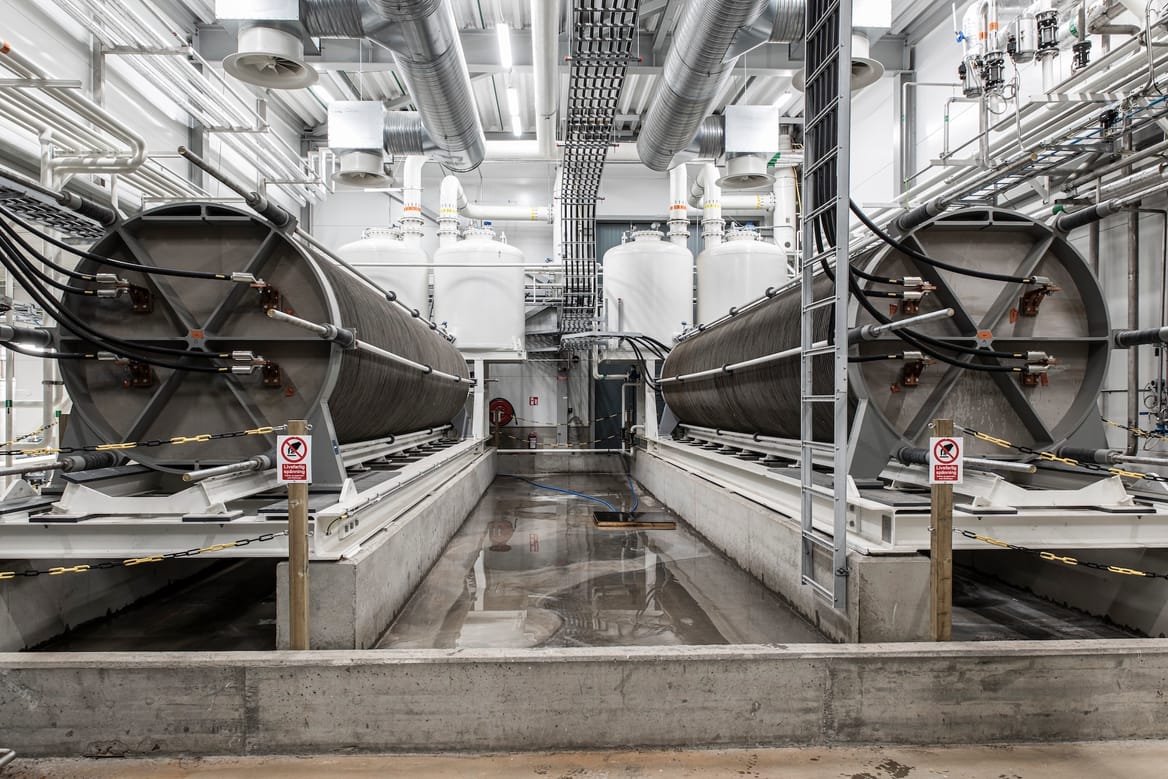
Over the past five years, Hybrit has operated its pilot plant for 61 weeks, producing 5,000 metric tons of fossil-free sponge iron pellets, each about the size of a chocolate-covered almond, which a microscope reveals to have a porous structure. The company has also conducted over 400 trial melts at the research institute Swerim, down the road, which operates its own electric arc furnace. At least one automaker is already using the end product in its vehicles, and Hybrit’s green steel has been incorporated into production lines for heavy machinery and consumer products. The process works. The question is whether it can scale economically.

Europe has positioned itself as the global leader in green steel, and major producers have set ambitious targets. SSAB and Thyssenkrupp aim for carbon neutrality by 2045; ArcelorMittal aims for 2050. Already, more than half the near-zero-emissions steel projects in the global Green Steel Tracker are in the EU. Among them are Hybrit’s neighbor and competitor, Stegra, with a goal of producing 5 million metric tons of green steel annually by 2030 at its Boden plant; and Finland’s Blastr, targeting 2.5 million metric tons by 2026. (In comparison, Edgar Thomson outside Pittsburgh, now part of the Mon Valley Works complex, produces 2.9 million tons annually.) Thyssenkrupp, ArcelorMittal, and Salzgitter have all announced hydrogen-based projects in Germany. The EU has approved nearly 9.3 billion euros in state aid for these ventures. The European Steel Association forecasts emissions reductions of 81.5 million metric tons of CO₂ equivalent per year by 2030 if current projects are completed on schedule.
But progress has stalled. As of August 2024, 80% of announced direct reduction capacity hadn’t moved forward. Only 3% had become operational. Recent setbacks have raised serious doubts about whether hydrogen-based steelmaking can scale up in time to meet the emissions-reductions targets.
Stegra, which, like Hybrit, aims to produce hydrogen on-site, has struggled through at least two seismic funding shortfalls. ArcelorMittal, meanwhile, has scrapped plans to convert two steel plants to green production in Germany because of the high electricity costs of running an electric arc furnace. And Thyssenkrupp announced in March 2025 that it might need to ditch a $3.3 billion conversion project, citing the lack of affordable green hydrogen needed to supply its steel mill.
Steel producers such as Thyssenkrupp that plan to outsource their hydrogen face a classic chicken-and-egg problem. They need confidence there will be a hydrogen supply before they’ll commit to building. But hydrogen producers need committed offtake before they’ll invest in production, and pipeline operators need both before they’ll convert networks to use H2. Nobody wants to move first.
“Companies are not going to invest if they don’t know the pipeline is going to be ready on time and that the offtake is there,” said Leif Christian Kröger, Thyssenkrupp’s head of public affairs.
In 2022, European leaders tried to address the lack of supply by setting an ambitious target of 10 million metric tons of domestic green hydrogen production and 10 million metric tons imported by 2030. Hydrogen conferences sprouted up in Rotterdam and Düsseldorf, replete with optimistic projections of when green hydrogen would meet price parity with “gray hydrogen” (produced using natural gas) and “blue hydrogen” (natural gas with carbon capture). But then the reality hit of how much renewable electricity would be required to meet the targets. With estimates running to the equivalent of almost twice the entire United Kingdom’s consumption in 2020 (a pandemic year), it’s not surprising that progress so far has been an underwhelming 1% of the goal. “They need to show a lot of progress in the next 12 to 18 months” to get there, Daniyal Sheikh, hydrogen market analyst at ICIS, a commodities research service in London, told me in October.
Nima Pegemanyfar is executive vice president of customer operations at Quest One in Hamburg, Germany. His company was making 1-megawatt electrolyzer stacks as far back as 1997 (as H-TEC Hydrogen Energy Systems) and in 2023 launched a 10-MW-to-100-MW modular plant. “Capacity was the restraint a few years ago, so we built that up as an industry,” he said. “Now, demand is what’s lagging.” This isn’t just the self-interested complaint of an electrolyzer manufacturer. Christine Falken-Großer, of Germany’s Ministry of Economic Affairs and Climate Action, agreed that “demand is the essential element right now to unlock growth” in green hydrogen production.
But the economics are punishing to buyers. Green hydrogen costs at least twice as much as its fossil-based alternative. Though natural gas prices have spiked with the closure of the Strait of Hormuz, futures contracts indicate the market believes this will be a temporary disruption that will be resolved before green hydrogen scales up enough to compete on price.
“Producer costs are higher than the price, and customers are not willing to pay the premium,” said Camilla Montemurro, a policy adviser at the trade association Eurogas. BloombergNEF doesn’t expect green hydrogen to reach price competitiveness before 2030, leaving scant time before the carbon allowances expire to achieve what it took Hybrit a decade to do.
Electricity costs in Germany — Europe’s leader in steel production — are a significant hurdle. “The green steel industry doesn’t want to decarbonize as fast as planned, because of the high cost of renewable electricity,” Pegemanyfar said. A million-metric-tons-per-year direct reduction plant running fully on hydrogen requires about 70,000 metric tons of hydrogen annually. That amounts to roughly 800 MW to 900 MW of electrolyzer capacity with around 1 gigawatt of electrical transformer capacity — a capital expenditure of 350 million euros to 700 million euros before you’ve bought any iron ore.
Infrastructure gaps compound the cost hurdle. Europe envisions several “hydrogen backbones” — networks of converted natural gas pipelines carrying hydrogen from ports or production sites to industrial (and perhaps commercial and residential) users. But the chicken-and-egg problem persists. “Pipeline operators won’t invest without offtake, and users won’t buy without infrastructure,” said Dirk Niemeier, director and Clean Hydrogen Solutions lead at PwC in Munich.
The backbone is only the half of it. Just as electricity requires tall transmission towers to move large volumes of power long distances and smaller wires to distribute it to users from central hubs, hydrogen requires both thick pipes (the backbone) and skinny pipes (for delivery to the end customers). Barbara Jinks, director of Ready4H2, an industry group that promotes using gas distribution grids to deliver hydrogen, described the scale of the undertaking: “More than half the gas won’t get to the end user with current infrastructure. Anything more than 3 kilometers [1.8 miles] from the backbone needs a distribution line.” The gas industry would rather sell capacity in the pipelines in which it has already invested billions to hydrogen producers than see this asset stranded as the world switches to running on electricity.
But “hydrogen has rather unique effects on materials, and many of them are not good,” noted P. Chris Pistorius, co-director of the Center for Iron and Steelmaking Research at Carnegie Mellon University in Pittsburgh. The pipeline networks can be converted, but that takes money and time.
Storage presents its own conundrum. Daniel Mercer, managing director of Storengy, a subsidiary of French energy giant Engie, hopes to provide “the hydrogen battery for all of Europe” by storing the gas in underground geologic formations near Hamburg, Germany. But funding is scarce. “We are the only part of the hydrogen system not supported by the government, yet we’re the part that takes the longest to develop,” he said. “Finding funding is the toughest part of my job right now. I need somebody to give me 1 billion euros and be OK with not making any money for eight years” while the underground H2 storage project is built out.
Importing hydrogen instead of producing it in Europe wouldn’t really help. Several European ports are developing terminals to import ammonia, which contains hydrogen molecules and is easier, cheaper, and safer to ship than pure H2. But converting hydrogen to ammonia and back again loses about half the energy contained in the original batch. So when the buyer collects a shipment “in Rotterdam or Hamburg, the price is suddenly double,” said Alexander Fleischanderl, chief technology officer of the London-based Primetals Technologies, which developed a proprietary technology called Hyfor for making green steel. “This is by far not competitive anymore.”
Like Hybrit, Primetals Technologies gets around problems with importing hydrogen by attaching production to its green-steel manufacturing process. It hopes to offer green steelmaking as a kind of service and secure contracts to build plants for companies shutting down their blast furnaces.
Amid these converging pressures, European policymakers and industry leaders must confront tricky questions about the continent’s industrial future. Can Europe keep steel production at today’s levels while ratcheting down emissions through the necessary conversion? Can the current political environment withstand losing jobs to countries where steel can be produced at lower cost?
“I would bet that at least some capacity will move away from Europe to more competitive regions,” Fleischanderl said. The logic is straightforward. With steelmaking, 80% of the energy and just 20% of the jobs are in converting iron ore to iron. Turning that iron into steel takes 20% of the energy and 80% of the jobs. “Why should we transport hydrogen if we could use the hydrogen locally” in producing iron? Fleischanderl asked. Most of the world’s iron ore is in places with ample opportunity for renewable energy — Australia, Brazil, Canada — and thus relatively cheap hydrogen. Decoupling the two processes geographically — producing the iron overseas and then shipping it to Europe, where it can be made into steel in an electric arc furnace running on renewable energy — would sacrifice relatively few jobs to gain a lot in savings on green hydrogen.
Pistorius also thinks that the less labor-intensive part of the steelmaking process could move overseas, where renewables are cheaper. “There’s a lot going for that argument,” he said. “Shipping iron is a relatively good way to [move] the energy around rather than trying to ship ammonia and regenerate it to hydrogen at the destination.”
But Germany’s 79,000 steel jobs hold an outsize place in the country’s identity. Next door in the Netherlands, farmers representing 1% of jobs and 1% of GDP almost brought down the government when it threatened to tighten pollution regulations. Germany’s ascendant populist forces, at least, are likely to resist sacrificing even 20% of steel jobs on the altar of green energy.
Either way, strategic considerations argue for maintaining at least some domestic production. Steel is essential for defense, infrastructure, and the energy transition itself — wind turbines and transmission towers are largely steel. The current energy crisis spurred by the war in Iran has driven home once again the risks of long supply chains, and the EU’s Carbon Border Adjustment Mechanism, which functions as a tariff on high-carbon imports, aims to protect European producers that invest in decarbonization.
Additional policy changes could further accelerate progress. The EU’s Renewable Energy Directive (RED 3) imposes strict requirements on what qualifies as green hydrogen — requirements that many argue are too stringent. “EU needs to relax RED 3,” Niemeier said. “That would bring down the cost.”
“You can’t have a free market at the beginning of this,” said Ad van Wijk, professor of future energy systems at Delft University of Technology in the Netherlands. “There will be buildup to a market, but you need some organization at the beginning. Are we able in the EU to organize all this, with all the politics that are behind the different fuels?”
Falken-Großer has learned from experience that “‘quickly’ is not a word that is known in Brussels.”
Julia Metz of Agora Industry, a clean industry research institution, suggests public procurement requirements and state-funded infrastructure projects to provide the nascent industry with guaranteed offtake. “Lead markets [created] through binding requirements in public procurement” would build “secure demand for green steel,” she said in an interview with Clean Energy Wire. The European Commission’s proposed Industrial Accelerator Act, part of the Clean Industrial Deal, aims to support domestic clean industries through public procurement.
Even without these nudges, 510 green hydrogen projects have reached final investment decisions, including 83 since May 2024, and customer commitments for green steel are emerging. BloombergNEF in 2025 tallied up almost 200 supply agreements for low-carbon steel. SSAB has announced deals with Volvo for green steel sourced from Hybrit; Mercedes also has an offtake agreement. The automotive industry — which accounts for significant steel demand — increasingly wants to claim carbon neutrality, said Martin Gidlund, SSAB’s transformation communication manager. “For 2040, they want to be able to say ‘made with green steel.’”
In Luleå, the scale of what’s being attempted becomes tangible. Within view of the current coking plant, SSAB broke ground in September 2025 on a building that is 1.5 kilometers (1 mile) long and about a half kilometer (quarter mile) wide and that will integrate two electric arc furnaces, continuous casting, hot rolling, and cold mill operations. The new plant will be able to run on either scrap steel or sponge iron from direct reduction using green hydrogen, or any mix of gas. Initially, the facility will use scrap, like SSAB’s existing U.S. electric arc furnace operations do in Montpelier, Iowa. At peak construction, up to 3,000 workers will be on-site. In a preview of Fleischanderl’s notion that ironmaking and steelmaking can be geographically separated, the iron ore will be reduced next to LKAB’s mining site and transported by rail to be turned into steel in Luleå. After some delays with the grid connection, startup is now targeted for late 2029. The environmental permit allows only two years of parallel production, so once the new facility starts, the blast furnace must shut down by 2032. Sweden’s single largest CO₂ emitter will be no more.

The business case rests on multiple factors. The existing blast furnace, built in 2000, will need relining soon — a significant investment. The coking plant, built in the 1970s and operating continuously since, is aging; renovation is not an option. “We cannot turn it off, because if we do, it will fall apart,” Gidlund said. The bricks inside the ovens will just shatter as they compress when the heat dies down.
Under the EU Emissions Trading System, continuing with coal-based production would cost SSAB more than 10 billion euros a year in carbon credits, the company has determined. “Either we invest a lot of money in old technology, or invest more money but in new technology,” Gidlund said. “We’re calculating that building the new one is using our capital more efficiently and also setting up for a system that will make us more competitive in the long run.”
It’s a dilemma that steelmakers worldwide need to face eventually — around 70% of blast furnaces need relining or other major maintenance by 2030. In the EU, over half will by 2035. If they’re relined — extending coal-based production — Europe will miss its climate targets and lock in 435 million metric tons of CO₂ over the next 20 years, according to industry estimates. China’s blast furnaces were installed more recently, so their owners can put off the decision for a few more years. But major steelworks in the U.S. are already investing in the past, opting for relining over going green. U.S. Steel is set to start relining its Gary Works blast furnace in Indiana this month; Cleveland-Cliffs plans to do the same at its Burns Harbor plant in Indiana next year.
Whether Europe’s bet on green steel succeeds depends less on technology than on coordination. Hybrit and Primetals Technologies have solved the technical issues. Quest One and other manufacturers can build electrolyzers at scale. Storengy understands how to bottle the hydrogen. Pipeline operators have the know-how to convert networks.
What’s missing is the choreography — getting all these pieces to develop simultaneously at the pace and scale required. “You have to build production and infrastructure and storage and the offtake side at the same time,” van Wijk said. “You have to replace blast furnaces with DRI, and that has to be done in the same volume by all kinds of different companies. If governments don’t have a certain commitment, it won’t happen.”
The pressure is building. The atmosphere doesn’t care who gets there first, but European steelmakers are facing overseas competition from China, which is curbing blast furnace approvals and scaling up hydrogen-fueled ironmaking output, and from the Middle East and North Africa, whose abundant cheap, renewable energy potential could position the regions as future suppliers of both green hydrogen and reduced iron (as long as, in the case of Qatar and United Arab Emirates, Iran keeps the Strait of Hormuz open). If European buyers who want green steel can’t get it in Europe, they will have other options.
“We’re in the lead on technology, and if we are too hesitant, China will drive by us,” warned Pegemanyfar at Quest One. “Already some German [electrolyzer] manufacturing is moving to China because there’s not enough demand here. If the price doesn’t come down, China will flood our market as it did with solar, and we’ll risk losing out on another key technology for the energy transition.”
Those that have opted to produce their own hydrogen, like Hybrit and Stegra, have a head start. Britain’s ITM Power sells a self-standing 50-MW hydrogen plant for the bargain price of 50 million euros. Thyssenkrupp, ArcelorMittal, and Salzgitter can turn to Primetals Technologies’ plants when its Hyfor tech is ready for market in 2028, but they may find that the hydrogen backbones and Ready4H2-promoted projects aren’t built up enough, or that the bottlenecks aren’t resolved soon enough, to prevent their drowning in red ink from the rapidly approaching carbon fees. “Very likely there will not be sufficient hydrogen in three years,” Fleischanderl said. “It takes plus or minus three years to build a hydrogen plant from commitment to production.”
Considering the widely distributed climate risks of business as usual, and the known health impacts to Europeans of burning coal, losing 20% of the continent’s jobs in steel — 300,000 total, or 0.1% of the jobs in Europe — would be a small price to pay for accelerating the transition to green steel. Germany already lost 115,000 jobs in photovoltaic manufacturing between 2011 and 2015 because of cheap imports from China and nobody blinked an eye. The question before Europe now is whether it will do what it takes to bring green steel to price parity with the dirty kind — either by subsidizing it or letting some production move overseas — or allow a tiny constituency to decide that no one must pay a few euros extra for a car and everyone will be forced to suffer the consequences of steel’s current 2.6 billion metric tons of annual emissions.
“Sometimes in Europe we can be too good,” Falken-Großer said.


.svg)
