

 Back
Back
We’re tracking the seven fossil-fuel plants the Trump admin has required to operate past their retirement dates — and which facilities could be hit next.
It was shocking back in May 2025 when the Trump administration took the unprecedented step of forcing an old coal plant to keep running, mere days before the facility was slated to retire.
And then the orders just kept coming.
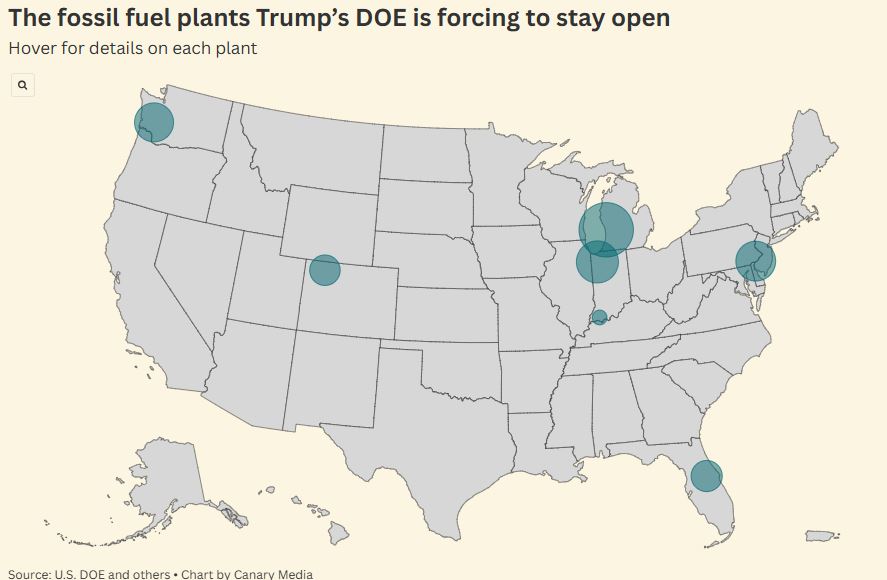
Here’s what you need to know about the plants forced to stay open so far.
J.H. Campbell in Michigan
This more than 60-year-old plant on the banks of Lake Michigan was the first to be hit with a stay-open order by Trump’s Department of Energy in May 2025, a week before the facility was slated to close.
Democratic state attorneys general from Michigan and the nearby states of Minnesota and Illinois, along with environmental groups, have filed legal challenges to try and block the J.H. Campbell order. Oral arguments took place before a federal appeals court in May 2026, and a ruling could occur as soon as August 2026.
Eddystone in Pennsylvania
The second stay-open order, also in May 2025, hit oil- and gas-fired units at Eddystone installed in the late 1960s. Plant owner Constellation Energy says the facility has operated infrequently since last year but has contributed to grid reliability, WEKU reported in July 2026.
Environmental groups have sued the DOE over its stay-open order. In Kentucky, a utility and the state’s Republican attorney general are taking federal energy regulators to court, arguing that customers in the state shouldn’t have to bear the cost of keeping Eddystone online.
R.M. Schahfer in Indiana
By the time the DOE ordered the roughly 50-year-old Schahfer plant to keep running, in December 2025, the facility was already half-broken. Filings from the plant’s owner, Northern Indiana Public Service Co., estimate that repairing the broken unit and continuing to operate the plant could cost more than $1 billion through 2027. The plant went offline for repairs in February 2026, and NIPSCO said in May that it likely wouldn’t run again until fall 2026. In other words, the plant could not help with grid reliability even if it were needed.
The Schahfer stay-open order was also a devastating turn for the neighbors of the plant who hoped to finally be free from the pollution it spews into the air. Environmental groups have filed a legal challenge to the DOE order, as have the Democratic state attorneys general of Minnesota and Illinois.
F.B. Culley in Indiana
CenterPoint Energy, the company that owns Culley Unit 2, has described it as its “smallest and most inefficient coal unit.” But that didn’t stop the Trump administration from ordering it to stay open in December 2025. In February, the company specifically asked the Trump administration not to renew its stay-open order for the plant, describing it as unreliable and unnecessary for grid reliability. The DOE reupped the order anyway.
Environmental groups have filed a legal challenge to the DOE order, as have the Democratic state attorneys general of Minnesota and Illinois.
Centralia in Washington state
The more than 50-year-old plant owned by TransAlta was slated for a retrofit that would turn it into a gas-burning facility before Trump’s stay-open order in December 2025. Although TransAlta says it’s still committed to that plan, it’s also seeking tens of millions of dollars in reimbursement for costs incurred to keep the coal plant online — a move that’s frustrating utilities in the region since the plant has sat idle in the months since the DOE’s order. Electric customers might be on the hook regardless.
Washington state’s Democratic attorney general and environmental groups have legally challenged the DOE’s Centralia orders. Washington’s Democratic governor also signed legislation that would impose hefty costs on TransAlta if Centralia began running again.
Craig in Colorado
Utilities in Colorado had been planning for about a decade to retire Craig Unit 1 at the end of 2025, but the Trump administration forced it to remain online. In February 2026, two cooperative utilities that co-own the plant filed a petition asking the DOE to reconsider its stay-open order, arguing that it will force their members to bear unnecessary costs. The agency has not relented.
Already, the plant’s owners have had to take on the costs of repairing a faulty valve that sent the plant offline in December 2025, and some estimates project that running the plant for a year beyond its retirement date could cost up to $150 million.
Environmental groups and Colorado’s Democratic attorney general have filed legal challenges to the DOE order.
Stanton in Florida
Unit 1 at the Stanton coal plant got its stay-open order in June 2026. The Environmental Defense Fund estimates that propping up the nearly 40-year-old facility could add an average of $21 to monthly electric bills if the costs are solely assigned to customers of the Orlando Utilities Commission, the municipal utility that owns the plant.
Are we missing any of the latest details on Trump’s coal stay-open orders? Let me know at kempe@canarymedia.com.
The cost of installing solar panels will rise. But now the U.S. has a large and fast-growing solar manufacturing industry to take advantage of the trade protections.
A far-reaching new tariff on solar imports promises to both raise the cost of installing the clean energy source and strengthen efforts to reshore solar manufacturing.
The White House announced the new tariffs Thursday on imported polysilicon and related products, including silicon-based solar panels and their precursor components. The decision came out of an investigation under Section 232 of the Trade Expansion Act of 1962, which allows the president to restrict trade over national security concerns. Polysilicon is the crucial input for computer chips as well as most solar panels.
Back in the first Trump term, competition from China had nearly eliminated solar manufacturing in the U.S. A small but vocal contingent of lingering or bankrupt manufacturers successfully pushed for new solar tariffs over the vociferous complaints of the far bigger population of installers and developers who stood to suffer from the higher input costs.
Then, in 2022, the Biden administration passed the Inflation Reduction Act, which created domestic manufacturing incentives for clean energy. It also embraced certain tariffs on foreign solar. The combination of proactive incentives and protective tariffs has since succeeded where tariffs alone had not: The U.S. became self-sufficient in module production in just a few years, with far more modest progress on cells and other components.
These days, developers of large solar projects routinely tout their “Made in the USA” credentials. A recent groundbreaking for an enormous solar-battery plant in Arkansas, for instance, highlighted the project’s use of domestic panels from First Solar, domestic trackers from Nextpower, and steel piles from a steel mill down the road.
The new tariffs stand to benefit a solar manufacturing industry that has grown immensely since the tariff battles of Trump’s first term. But this solar trade protectionism is also certain to raise the cost of building new solar farms — the main new source of electricity in the U.S. — at a time when power bills are already soaring.
Here are the key facts for understanding the new tariffs and how they’ll affect the future of clean energy.
On Dec. 4, the U.S. will enforce minimum prices for the following imports:
The decision also imposed a 15% ad valorem duty on polysilicon derivatives.
The December start date has rankled some supporters of the tariffs.
“It gives importers a window to surge product into the U.S. market before duties take effect, which is precisely the kind of behavior our trade laws are designed to prevent,” said Tim Brightbill, an attorney who has successfully petitioned for solar tariffs for years. “It will be critical that the government rigorously enforce the rules against stockpiling so that importers cannot undermine the remedy before it is even in place.”
Trump picked seemingly arbitrary tariff rates for most of the world in April 2025, reshaping the flow of global trade until even the conservative Supreme Court declared he lacked the legal authority to do so.
The Section 232 tariffs come from a different process that has a strong legal footing. The statute gives the president broad authority to impose tariffs for strategic industries after an investigation by the Commerce Department. Trump has previously used this process to raise tariffs on items such as steel and aluminum, and those tariffs have held.
The U.S. builds more solar farms than any other electricity source. But the Trump administration has not been friendly toward solar developers: It’s removed tax credits for solar installations, obstructed permitting processes, and espoused plenty of anti-solar rhetoric.
The new tariffs add more costs onto the list of things developers have to worry about. The most pronounced impact will come from the added costs for polysilicon, ingots, and wafers, because the U.S. lacks the capacity to produce these at anywhere close to the levels needed to meet the current domestic demand.
As of this summer, the U.S. has 10.6 gigawatts of operating cell capacity, according to the Solar Energy Industries Association. The new cell tariffs should drive additional demand to Qcells, ES Foundry, Suniva, and Silfab — the only companies producing that item domestically. That will still leave tens of gigawatts of annual installations exposed to higher prices for cells that will have to be imported.
“The U.S. will remain dependent on importing cells, wafers, ingots, and/or raw polysilicon for the foreseeable future,” said Pavel Molchanov, a cleantech investment analyst at Raymond James.
The median price for solar modules in the U.S. is 27.1 cents per watt, according to the database compiled by Anza Renewables; that reflects a mix of domestic and imported modules. This means the new floor price for imported panels will be 40% higher than the current median price on the U.S. market.
Modules assembled in the U.S. from imported materials cost 30 cents per watt; now, the cells that go into those modules will have a minimum import price of 22 cents per watt.
The median price for domestic modules using domestic cells is 47 cents, per Anza. Those panels could become even more expensive if the manufacturers can’t get their hands on domestic wafers.
The U.S. already had among the most expensive solar module prices in the world thanks to previous tariffs; the new price floor will be nearly five times the global benchmark price, Molchanov noted.
The decision provides for tariff exemptions if companies get Commerce Department sign-off on plans to build factories by Jan. 20, 2029. This could mitigate tariff-driven price increases while ingot, wafer, and cell capacity grows to meet demand.
Tariff supporters see this as a vital tool to protect the fledgling U.S. solar manufacturing base and drive further investment in the trickier, more expensive stages of the supply chain. Since it’s a global tariff, it could finally end the long-running Whac-A-Mole problem in which U.S. tariffs belatedly catch up to Chinese manufacturers setting up shop in new countries.
“Every time U.S. cell and module producers seek trade relief, the Chinese companies shift their unfair trade practices to other countries,” said Brightbill, a partner at Wiley Rein LLP. “We are hopeful that if this Section 232 action is done right, it could be an important step toward addressing this problem.”
This is a good moment to be Qcells, the subsidiary of Korean conglomerate Hanwha that invested more than $2 billion to build a combined ingot, wafer, cell, and module plant in Georgia. Cells started rolling off the line in June, and the ingots and wafers are set to enter production later this year. Hanwha’s stock price surged by 17% after the announcement, though it has since subsided somewhat.
Longtime U.S. manufacturer First Solar stands to benefit as well, as its cadmium-telluride thin-film technology does not rely on the silicon supply chain. The company can sit back and watch its competitors scramble to figure out the new realities of global trade in silicon. Not surprisingly, First Solar CEO Mark Widmar hailed the 232 outcome as “one of the most strategically significant trade measures in decades.”
But a cohort of manufacturers could be caught in an awkward transitional phase: Their module production will be protected from foreign modules, but their own costs will go up unless more cell capacity comes along.
With the sub-$30,000 Fathom, Ford hopes to capitalize on growing demand for low-priced EVs and avoid the fate of its now-defunct Lightning.
Ford’s first all-electric pickup truck didn’t exactly fly off the lot. The automaker is hoping a lower-cost model will fare better.
On Thursday, the automaker rolled out a first look at its forthcoming all-electric pickup truck. The Fathom, as Ford is calling it, will start at $28,350 once it’s eligible for preorder early next year, and will headline a planned suite of low-cost EVs.
Details on the Fathom are scarce. Ford previously said its new entry-level model would travel just under 300 miles on a full charge, but that higher trim packages would be able to go farther. It’ll be similar in size to Ford’s Ranger pickup, but with a roomier interior than Toyota’s RAV4 crossover SUV. Ford aims to deliver the first vehicles in fall 2027.
The Fathom will be offered at a far lower price point than Ford’s now-defunct F-150 Lightning, as well as other EVs on the market. The average new EV clocked in at over $56,000 as of June, while the average full-size pickup costs over $66,000.
The Lightning, meanwhile, cost more than $55,000 by the time it was phased out late last year. In total, around 105,000 Lightnings were sold across the truck’s four years on the market. (Ford sold more than 800,000 F-series fossil-fueled trucks in 2025 alone.)
So how will Ford cut the Fathom’s price tag so dramatically? The truck will be built on what Ford calls a “Universal EV Platform,” which will allow it to construct several types of EVs with common parts and on a shared assembly line.
The Fathom has a noteworthy competitor in the Jeff Bezos–backed startup Slate Auto, which will soon offer a bare-bones pickup that starts at just below $25,000 — radio and power windows sold separately. But with touchscreen navigation and even bidirectional charging capabilities, the Fathom comes packed with a few more perks for its slightly higher price.
Cheaper models are helping drive EV adoption as drivers worldwide embrace cutting-edge and low-cost Chinese-made EVs. In the U.S., Chinese EVs aren’t available, and affordable models are rare — plus President Donald Trump has eliminated federal discounts for EVs.
Those factors go a long way toward explaining why EV sales in the U.S. are set to shrink this year while they hit new records elsewhere. Though electric options are often cheaper to own and operate than comparable gas cars, their higher upfront cost has scared off many drivers.
Price point, then, is where the opportunity lies for EV makers in America. The Fathom — and other as-yet-undisclosed Universal EV Platform models — are Ford’s attempt to seize it.
Federal clean energy funding remains in limbo
A coalition of nonprofits scored a major — if tentative — win this week. A federal appeals court ruled that the EPA acted improperly when it terminated billions of dollars in “green bank” financing for nonprofits to undertake climate and clean energy projects across the country, Canary Media’s Jeff St. John reports. But that doesn’t mean grant recipients will get their money now, as the Trump administration still can appeal the ruling to the Supreme Court.
These projects aren’t the only ones waiting on money they were promised by the Biden administration. The Department of Energy was supposed to allocate billions of dollars to utilities, local governments, and other recipients for grid-improvement projects intended to lower power prices. But as some former DOE employees told Jeff, the department has explicitly canceled hundreds of these grants, and delayed the disbursal of plenty more, jeopardizing projects that would benefit red and blue states alike.
xAI is removing its mobile gas generators — next year
Elon Musk’s SpaceX has been using unpermitted mobile gas turbines to power its xAI data centers outside Memphis for months. Now, they finally have a termination date — but it’s a long way off. SpaceX said it will remove the turbines by next July, and then turn to a 1.2-GW gas power plant it’s currently building.
The data centers’ supposedly temporary solution has prompted a lawsuit from the NAACP, which alleges neighboring majority-Black communities are dealing with unchecked air pollution and constant noise. And as I wrote a few weeks ago, xAI isn’t the only tech company turning to “pop-up” power plants for quick solutions. In Georgia, one developer is facing scrutiny after installing temporary gas turbines before receiving necessary permission. And xAI will likely roll in some generators at another data center soon — Musk recently bought a company that operates a fleet of these mobile gas and diesel turbines.
Wind’s court win: A federal judge orders the Pentagon to resume military reviews of onshore wind projects, ending a blockade that had stalled more than 150 arrays. (Canary Media)
Change of plans: Steel giant Cleveland-Cliffs will repurpose as much as $500 million it was awarded under the Biden administration to lower emissions at its Middletown, Ohio, operation, instead aligning its work with “the Trump administration’s energy dominance goals.” (Canary Media)
Harnessing the midnight sun: European countries are starting to build large solar farms near the Arctic Circle and other areas once deemed too dark or cloudy for effective production, as lower panel and equipment prices and higher power costs make these projects viable. (Bloomberg)
Solar growth spurt: Renewable energy developer Origis Energy switches on another 500 MW of solar capacity at its West Texas array, bringing the project’s total operating capacity to nearly 1 GW, with as much as another gigawatt of generation still to be built. (Electrek)
Capitalizing on crisis: Eight major oil companies made more than $90 billion in profits from April through June, up from $50 billion during the same period last year, as oil prices skyrocketed amid conflict in the Middle East. (The Guardian)
Coal’s deadly consequences: A new medical study finds cases of black lung in U.S. coal miners are rising to their highest levels since the 1970s — a warning sign as the Trump administration tries to revive the coal industry. (NPR)
It’s a demonstration of the tech Oklo will use for its medical isotope business — not power plants — but marks a milestone nonetheless for the buzzy firm.
Oklo, a publicly traded small-modular-reactor firm backed by OpenAI chief Sam Altman, has become one of the highest-profile companies working on next-generation nuclear energy technologies. Two years ago, it debuted on the stock market and became retail investors’ go-to for betting on America’s atomic renaissance.
Yet while the company’s valuation rose at one point to nearly $24 billion and its plans expanded into recycling nuclear waste, fabricating its own fuel, and producing medical isotopes, it had yet to split atoms from one of its reactors.
That is, until now. On Thursday morning, Oklo announced that its Groves Isotope Test Reactor, a low-power unit the company built on private land south of Austin, Texas, as part of a Department of Energy testing program, had sustained a chain reaction. The reactor is a demonstration version of the technology Oklo will use for its new medical isotope business, though the firm says it will help its efforts to build reactors that generate electricity.
Known as achieving criticality, this chain reaction is a necessary if far from sufficient step toward commercialization for nuclear-energy aspirants. Today’s announcement — first reported by Canary Media — makes Oklo the fifth of the 10 companies in the DOE’s Reactor Pilot Program to split atoms in the past two months. Construction on the Groves test reactor was completed in less than one year.
In 2022, Oklo’s application for a Nuclear Regulatory Commission license was resoundingly rejected. It has yet to resubmit the paperwork for its proprietary 75-megawatt liquid-sodium-cooled power reactors, though the agency granted Oklo its first license to operate a medical isotope reactor in March.
As it stands, just two advanced nuclear startups — TerraPower and Kairos — are actively building out reactors in the United States. Oklo is preparing a site near the Idaho National Laboratory for its first small modular reactor but does not yet have permission to work on the reactor itself.
The Groves facility, located in rural Caldwell County, allows the company to essentially practice for when and if it gets the green light to build its first full-scale reactor. The test reactor will also grease the links of the supply chain that Oklo will use both for its medical isotope business, which is intended to generate early revenue, and eventually for its reactors. For example, Oklo bought the low-enriched uranium for the test reactor from a commercial vendor, the French reactor-fuel company Framatome.
In contrast to the four other startups that have announced criticality this year, Oklo’s project was built at “a greenfield site on private land” in a process that included “full-scale civil excavation and construction, commercially procured fuel and all major components, and developed its operating programs in-house,” co-founder and CEO Jacob DeWitte said in a statement. All others happened at federal facilities or on public land.
“Reaching criticality in less than a year is an incredible milestone for our team,” DeWitte said.
In a statement, Texas Gov. Greg Abbott said the project would lay the groundwork for expanding “isotope production for critical medical therapies and reinforce Texas’ leadership in nuclear innovation.”
“Texas is leading America’s nuclear renaissance by advancing the technologies that will power innovation and strengthen our nation’s future,” said the Republican, who is running for reelection this year.
Offshore wind farms not only pose no threat — they provide national security benefits, in addition boosting the grid and economy, according to military experts.
When the Trump administration issued stop-work orders on all five offshore wind projects under construction late last year, it offered one justification: The turbines could compromise national security.
Experts were immediately critical of this assertion, not least because it came after months of unrelenting hostility toward the offshore wind industry from President Donald Trump. Plus, it’s standard practice for the U.S. Department of Defense to assess offshore wind projects, and each one under construction had been thoroughly vetted.
Now, some military experts are going even further, arguing not only that offshore wind poses no threat but that building it can bolster security.
“Offshore wind is not a national security threat — it is a national security imperative,” said Dave Belote, a retired U.S. Air Force colonel and CEO of renewable energy consultancy Dare Strategies, at the National Conservative Energy Summit in Boston this week.
Belote was among a panel of energy experts with U.S. military backgrounds who said the Trump administration’s national security rationale is just plain wrong.
The courts have unanimously ruled against Trump’s stop-work orders, allowing work to resume on all five offshore wind projects. Three are now sending power to the grid. On Thursday, a court ruled against the Trump administration’s use of similar justifications to halt the permitting of more than 150 land-based wind projects, too.
In fact, experts said, offshore wind is vital to national security.
In the near future, for example, the U.S. military is likely to encounter wind turbines in and near the waters off China, where offshore wind is being built at a rapid pace. American wind farms, the panel said, should be considered vital training grounds where radar operators can learn to distinguish spinning blades from other objects, and submarine crews can practice navigating the underwater obstacles created by turbine foundations.
“You don’t get that unless you have an environment where you can practice that first,” said Kirk Lippold, a retired U.S. Navy commander who is now an outspoken advocate for clean energy and energy security.
He also pointed to countries including Belgium and Poland that are using turbines as platforms for additional radar sensors that can improve the ability to detect threats.

The panel also dismissed the Trump administration’s stated qualms about turbine blades making it harder to detect hostile drones. During the original federal approval process, any required national security mitigations were identified and agreed to. And software and well-trained operators can tell the difference between turbine blades and other equipment on radar, Lippold said.
“From a national security perspective, what the administration is saying just doesn’t hold water,” he said.
For supporters of offshore wind, of course, the national security question has always been a red herring. Planned wind farms have long been the cornerstone of the Northeast’s decarbonization and grid reliability goals. The installations already in operation — Vineyard Wind off Massachusetts, South Fork Wind near Long Island, and Revolution Wind off Rhode Island — have helped keep the grid going with emissions-free electricity during heat waves and cold snaps.
There are other benefits as well. Hosting a land-based facility like an offshore wind port can have an economic impact equivalent to an auto manufacturing facility, said John Szoka, CEO of summit host the Conservative Energy Network and a retired Army lieutenant colonel. And the turbine foundations can create valuable habitats for fish and other marine life, he noted.
The panel’s comments give support to those who say Trump’s ostensible security concerns are just a last-ditch effort to kill the offshore wind industry he has been steadily weakening since he took office. Only 6 gigawatts of offshore wind are expected to be completed by 2035, per BloombergNEF — far fewer than the 39 GW the research firm anticipated in 2024.
Trump’s argument, Belote said, strained credulity from the beginning. The area slated for the five offshore wind farms targeted by the stop-work orders amounts to 0.016% of the total area of the Atlantic continental shelf, he said, noting that such a small area could not compromise an entire nation’s security.
“It was ludicrous on its face,” he said.
An update was made on Aug. 6, 2026, after Judge Karin Immergut of the U.S. District Court for the District of Oregon ruled that the Department of Defense must restart reviews for wind projects.
A federal judge issued yet another blow to Trump’s war on wind, ruling that the Defense Department must resume its review of onshore wind permit applications.
The U.S. Department of Defense has for months refused to conduct routine military evaluations of proposed onshore wind farms, creating a de facto moratorium on the clean energy source at a time of exploding electricity demand.
On Thursday, a federal judge appointed by President Donald Trump ordered the agency to resume its reviews — and put an end to that freeze on wind projects. The preliminary injunction requires the DoD to report to the court on its progress every 30 days while the legal case proceeds.
“The court just stopped the Trump administration from misusing a long-standing review process to block the clean, affordable power that Americans need,” Phelps Turner, senior attorney, U.S. Clean Energy, at Environmental Defense Fund, said in a statement. “For months, wind projects capable of supplying millions of homes and businesses with low-cost power have been needlessly obstructed, as electricity costs and demand soar.”
The DoD delays, which began in August 2025 and ramped up to an outright halt this spring, have affected more than 155 projects across 21 states. The Trump administration has cited national security claims to justify this freeze, echoing arguments it made when stopping work on five offshore wind farms late last year. Those stop-work orders were all rejected by the courts.
The renewable energy groups that brought the suit contend that the freeze was never about national security — it was about furthering Trump’s war on wind energy.
Demand for electricity is rising quickly as data centers clamor to connect to the grid. This mad dash for power threatens to drive further increases in electricity costs, which have already ballooned under Trump despite his campaign pledge to cut bills in half.
Wind energy could help ease those rising costs: The energy source already supplied 10% of U.S. electricity last year, and onshore wind is the cheapest form of energy generation to build, according to investment bank Lazard.
Nevertheless, Trump has doggedly pursued a different campaign promise: blocking all wind farm construction.
His administration has fallen short of that dramatic goal — in fact, in June, the largest wind farm in the U.S. went online — but it has notched successes, too.
The administration has crushed the offshore wind industry, with the exception of the five installations off the East Coast. It ripped away tax credits for wind developers in last year’s sweeping One Big Beautiful Bill Act. And in August of last year, it scrapped the beleaguered Lava Ridge Wind Project, a 1-gigawatt onshore wind project that the Biden administration had approved for construction on public lands in southern Idaho.
The DoD freeze is not the first time the Trump administration has used agency reviews to create delays for wind developers.
Last July, the Interior Department created a “choke point” for permitting new wind and solar projects on federal lands by insisting that Interior Secretary Doug Burgum personally sign off on certain permit approvals. In April, a federal judge ordered the Interior Department to lift its blockade while a lawsuit led by industry groups makes its way through court, though the agency appealed the decision in June.
These delays have real stakes. Wind developers that hit certain construction milestones before July 4, 2026, locked in federal tax credits before they expired. But they need to finish construction within four years to receive those discounts.
Further delays, whether from the DoD or from another tactic at a different agency, could cause developers to miss those deadlines — and put projects on shaky financial ground.
Cleveland-Cliffs got $500M for a big green-steel push. Under Trump, the firm is “rescoping” to work that perpetuates coal use and will boost local pollution.
Steel giant Cleveland-Cliffs was supposed to use up to $500 million from a Biden administration grant to usher in cleaner steelmaking in southwestern Ohio. Now, the company plans to instead put those funds toward a project that locks in old coal-based tech for decades and amps up local air pollution.
In a July 23 earnings call, Cliffs CEO Lourenco Goncalves confirmed that the company aims to redirect the 2024 grant — which Congress originally earmarked for work that accelerates industrial decarbonization — to align with the pro-fossil-fuel Trump administration’s priorities.
“We have made major progress on the re-scoping of the Middletown project in compliance with the Trump administration’s energy dominance goals,” Goncalves said.
The money from the Department of Energy’s now-dismantled Office of Clean Energy Demonstrations was meant to build a new facility to replace a coke-powered blast furnace at Cliffs’ Middletown Works. Blast furnaces use the dirty, coal-based fuel to purify iron ore into iron, which is then made into steel.
The new “direct reduced iron” facility would have purified iron ore without coal or coke by employing ions from natural gas or hydrogen to strip away unwanted oxygen ions. Then, two electric melting furnaces would then have readied the resulting iron for the final steps of steelmaking in the plant’s basic oxygen furnace.
Cliffs had indicated it hoped to eventually use hydrogen at Middletown Works, and the DOE estimated the facility upgrades could have slashed greenhouse gas emissions by up to 1 million tons annually.
But last summer, amid the Trump administration’s clawbacks of Biden-era clean energy funding, Cliffs began reevaluating the plan. A February air-permit application submitted to the state revealed the firm’s new idea: Simply refurbish Middletown Works’ blast furnace so it can run for another few decades, and add a cogeneration plant that uses the furnace’s waste heat to generate electricity and steam for the facility.
It wasn’t clear back in February that this work would be funded by the DOE grant, given that Congress originally allocated the funds for “advanced industrial technology,” which is defined as something “designed to accelerate greenhouse gas emissions reduction progress to net-zero at an eligible facility.”
Goncalves’ comments in last month’s earnings call confirm that Cliffs does still plan to use the money for the Middletown Works, but to install run-of-the-mill technologies with questionable climate benefits.
“The Middletown blast furnace is due for a reline by 2030,” he said. “And this DOE grant will allow us to go further in optimizing the furnace and maximizing energy efficiency by capturing and using blast furnace gas to generate electricity on-site.”
Making electricity from the blast furnace’s gas is better than simply spewing it into the air, and would presumably offset some emissions from producing that power elsewhere. However, the project would still result in many more tons of greenhouse gases than the initial plan.
Goncalves noted that Cliffs would have another public announcement about the project within a month or so. Company representatives did not answer Canary Media’s follow-up questions about the work, its costs, emissions, or other issues.
Climate advocates are lamenting Cliffs’ walkback.
“The original proposal would have cut climate pollution, it would have cut health-harming pollution, and it would have created jobs,” said Hilary Lewis, steel director at Industrious Labs, which advocates for decarbonizing heavy industry.
The cleaner-steel project would also have positioned the facility to compete favorably in markets where buyers still aim to lower their greenhouse gas emissions, she said.
“This is a horrible trade,” Lewis said.
Along with its climate impacts, Cliffs’ U-turn will result in its neighbors breathing in more dangerous chemicals.
Already, Middletown Works ranks in the top 10 polluters statewide for several health-harming contaminants, according to a 2024 report from Industrious Labs.
With the cogeneration plant and related upgrades, the plant is expected to annually emit 534 more tons of sulfur dioxide, 334 more tons of carbon monoxide, 179 more tons of nitrogen oxides, and 12 more tons of chemicals that increase smog, according to a draft permit issued by the Ohio Environmental Protection Agency in June. There would also be nearly 100 additional tons of different sizes of particle pollution.
Yet while projected emissions would be higher than those for almost all times during the past five years, the draft permit concludes net reductions will occur for all those health-harming chemicals except carbon monoxide.
That’s because instead of comparing the projected emissions with those in recent years, the Ohio EPA uses data from 2013 to 2015 as a baseline. Back then, Middletown Works still ran a hyper-polluting facility to make coke on-site. That group of ovens shut down in October 2021.
Comments filed by Industrious Labs and other environmental advocates challenge the Ohio EPA’s use of old data to calculate those offsets. They argue that if the agency had used emissions numbers from the past decade as the baseline, it might have found that the plan surpassed thresholds that would trigger further regulation or pollution limits.
Meanwhile, the Ohio EPA’s offset calculation offer little comfort for some area residents who have long felt plagued by the plant’s pollution.
“The cogen plant will reduce Cliffs’ energy use, saving them money, while they continue to harm [my] family and my neighbors’ health, and [with] even more pollution,” said Donna Ballinger, who lives approximately 1,000 feet from the Middletown Works and spoke at a July 9 public hearing.
Another local, Amy Wray, wrote to the Ohio EPA, “If it’s going to increase pollutants then we don’t want it. This town is already a toxic chemical soup.”
Still, Cliffs has substantial support from locals who see the plan as an environmentally sound way to keep the Middletown Works going.
“The proposed improvements to Cleveland-Cliffs will significantly reduce the facility’s carbon footprint while securing high-quality manufacturer and construction jobs for generations to come,” said Brian Kuhbander, who spoke for the Construction and General Laborers’ Local 534 union at the July 9 hearing.
It’s worth noting that the original green steel plan would have had big employment benefits, too. Besides protecting more than 2,000 existing jobs at the Middletown Works, the new facilities would have created 170 new permanent positions in addition to 1,200 construction jobs.
The public comment period on the draft permit is over, and the Ohio EPA expects to make a decision on a final permit by the end of this year, according to Dina Pierce, a public information officer for the agency. Cliffs has 18 months to begin construction once a permit is issued.
How long it may take to finish the project remains unclear. As power demand from data centers skyrockets, waiting lists for turbines needed for the cogeneration plant have grown to five years or more.
Lewis of Industrious Labs said it’s “not too late” to switch back to the earlier approach, particularly since the company did a lot of work to develop the cleaner-steel plan. A 2024 press release from Cliffs said it was prepared to invest more than $1 billion in addition to the government funding for that project, which would also have curbed its future production costs.
“They can — and they should — bring back that original plan,” Lewis said.
The Department of Energy has canceled or stalled funding for thousands of projects that would improve the country’s stressed grid — and not just in blue states.
In Wisconsin, utility Alliant Energy has called off a project meant to reduce power outages in disadvantaged and tribal communities, after the Trump administration terminated a federal grant that would have supported it.
In California, the Sacramento Municipal Utility District, which has deployed and upgraded hundreds of thousands of advanced smart meters, has not received any reimbursement from the U.S. Department of Energy for the work since October, when the Trump administration declared it was killing grants that it described as fueling “the Left’s climate agenda.”
And in the upper Midwest, a consortium of regional grid operators, utilities, and state agencies is still waiting for $464 million in DOE funds meant to help build high-voltage transmission lines to reduce grid congestion — although the agency in charge of the project says the funding will soon be restored.
Across the country, hundreds of such projects to improve grid reliability and make electricity more affordable face a highly uncertain future — the result of Trump administration actions that have slowed the outflow of billions of dollars of DOE funds to a trickle.
Some of those projects in “blue states” were targeted as political retribution, as recent reporting from The New York Times has made clear. A handful of grant awardees in this category have won favorable court rulings, and more are seeking legal redress.
But many others are suffering from the DOE’s broader failure to carry out work that Congress has tasked it to do, according to groups that have been monitoring the agency since the start of last year. In red and blue states alike, the DOE is forcing thousands of grantees to undergo a laborious review process, so even projects that have not been officially terminated are stuck, unable to determine when or if they’ll start getting the money they’re owed.
According to an April report from the DOE Alumni Network, a group of former agency employees, the DOE has announced the termination of 356 awards totaling $12.5 billion since January 2025, and has threatened to terminate 303 additional awards worth $12.2 billion.
But the DOE has also stalled projects for “a large number of awardees who have never appeared on any list,” the report found. “This means the agency is not moving forward to resolve disputes, finalize conditional awards, or respond to continuation applications, leaving projects in administrative limbo and functionally freezing promised funds.”
“DOE both overtly canceled a set of projects, then had this pattern of behavior where for 15 months they stopped actively managing projects,” said one former DOE official. “Projects can’t proceed to the next stages and get their next tranche of funding.”
The former official, who asked not to be named, described a pattern of stalling, stonewalling, and “ghosting” utilities, state governments, energy companies, and nonprofit groups awarded grants under the Biden administration.
Many of those projects have been caught up in a process the DOE announced in May 2025 to review all financial assistance “on a case-by-case basis to identity [sic] waste of taxpayer dollars, protect America’s national security and advance President Trump’s commitment to unleash affordable, reliable and secure energy for the American people.”
Then, in October, the DOE announced the “termination of 321 financial awards supporting 223 projects” — all of them tied to states that voted for Kamala Harris in the 2024 election. The DOE’s termination announcement came right after Russ Vought, director of the White House Office of Management and Budget, declared in a social media post that the administration would cancel “nearly $8 billion in Green New Scam funding.”
Canary Media reached out to a subset of DOE grantees that had won funding from the Grid Resilience and Innovation Partnerships (GRIP) program created by the 2021 bipartisan infrastructure law. The DOE issued a total of more than 100 GRIP grants — in October 2023, August 2024, and October 2024 — for projects to enlarge the grid, harden it against extreme weather, build microgrids to protect vulnerable communities, and deploy technologies to integrate solar, wind, EVs, and batteries.
Some of the GRIP projects involve expanding clean energy and serving disadvantaged communities, two bugbears of the Trump administration. But many more are straightforward grid improvement projects that need federal dollars to reduce the costs borne by utilities and regional or state agencies.
The largest of these is in California. In 2024, the DOE awarded a $630.6 million grant aimed at upgrading more than 100 miles of high-voltage power lines in the state with advanced power cables capable of carrying more electricity along existing transmission corridors, a project estimated to be capable of delivering about $200 million in savings from improved energy efficiency. That project appeared on the termination list in October, and the DOE has not disbursed money for it, according to federal records, though negotiations for resuming funding are underway.
This uncertainty appears to apply to the majority of GRIP projects, according to Emlyn Bottomley, founder of the consultancy High Road Analytics, which focuses on workforce development, and a former Department of Labor deputy policy director in the Biden administration.
According to his tracking of federal spending, of the roughly $11.4 billion in DOE funds obligated to grid infrastructure and resilience — a category that includes GRIP program funds — $9.1 billion remains “at risk,” with funding stalled or timelines for completion shortened. That’s compared with $400 million in grants that have been canceled outright and $1.3 billion not yet disbursed but showing no signs of being stalled.
“It’s a shame these projects are being held up or canceled, especially since the case for them is fairly bipartisan — spanning national security, economic competitiveness, and cost and affordability,” Bottomley said.
All of the GRIP projects required partners to provide matching funds at an amount at least equal to the money DOE is providing, the former DOE official added. “You’re talking about folks putting hundreds of millions of dollars on the line. People have skin in the game for these awards.”
Many of the GRIP grantees contacted by Canary Media declined to comment, citing ongoing discussions with DOE. Others reported that they are no longer pursuing the projects as described in their grant applications, at least not with the help of DOE money.
The latter is the case for Alliant Energy’s Smart Power Automation in Rural Communities (SPARC) project, which won a $50 million grant in late 2024 to add grid visibility and control devices to 140 grid circuits in disadvantaged and tribal communities served by subsidiary Wisconsin Power & Light — a utility in a blue state.
Those devices could allow the utility to quickly find and isolate faults on its grid, cutting power outages in targeted communities by up to 50%. They could also support grid-management software to help integrate more renewable and distributed energy, and potentially expand wireless communications access to these remote areas.
Alliant “voluntarily withdrew” from the grant award process in April, six months after its grant was terminated by the DOE, Alliant spokesperson Melissa McCarville told Canary Media. The agency has disbursed no funds to the project, according to federal records.
Alliant is “actively pursuing many of the goals that were outlined in the SPARC project,” McCarville wrote in a May email, but as part of a 10-year strategic plan with no set timeline. “While the grant did provide valuable funding, it also required a significant investment, and we want to ensure our contributions are properly prioritized,” she wrote.
Still, at least one grant-funded project in a blue state is proceeding despite the absence of DOE funds.
That’s the case for the Sacramento Municipal Utility District, which serves the state’s capitol and environs. In 2023, SMUD won a $50 million grant to support a project to deploy 200,000 smart meters and grid devices and underlying software controls to “improve grid reliability, resilience, visibility and efficiency,” utility spokesperson Gamaliel Ortiz told Canary Media in an email.
SMUD has carried out much of that work, which includes close to $100 million in utility spending, and has received almost $33 million in reimbursements from DOE, according to federal records. However, SMUD “has not received reimbursement for any costs incurred after the grant was cancelled on October 10, 2025,” Ortiz wrote. “We remain committed to this critical work and stay flexible as we evaluate how the loss of grant funding may impact the project timeline.”
In other blue states, some grants have been canceled and others are still under negotiation. In Oregon, utility Portland General Electric has recently learned that the DOE may reinstate a previously terminated $50 million grant to support next-generation “grid edge computing” devices, utility spokesperson John Farmer told Canary Media in an August email. That project had received only $1.2 million in DOE funding, according to federal records.
The purpose of the project was to integrate batteries, EVs, and community solar into its grid to “improve resilience, enable the integration of distributed energy resources, and maximize customer investments in home energy solutions.”
“PGE is evaluating the benefits and risks of reinstating the grant,” Farmer told Canary Media. The utility “recognizes that there are inherent risks of additional and changing demands by the DOE as the administration’s priorities change.”
At the same time, PGE remains in discussion with the DOE on a $250 million grant to build a high-voltage transmission line with the Confederated Tribes of Warm Springs, Farmer wrote. “Without this funding, we would lose the opportunity to offset those costs with external dollars, which could limit how efficiently we can advance needed grid improvements.”
Red state projects are also being held up because the grantee is located in a blue state. Such is the case of the aforementioned $464 million DOE grant for the Joint Targeted Interconnection Queue project to build new transmission lines between the Midcontinent Independent System Operator and Southwest Power Pool, two grid operators spanning nearly a dozen Midwestern states.
The $464 million GRIP grant was meant to bolster $1.3 billion in matching funds from utilities in the region to enable nearly 30 gigawatts of new generation to be built in Iowa, Kansas, Minnesota, Missouri, Nebraska, North Dakota, and South Dakota. All but one of those states voted for Donald Trump in the 2024 election — but the Minnesota Department of Commerce, the entity awarded the grant, is in a blue state.
In May, the Minnesota Department of Commerce announced that the DOE “will honor its $464 million grant,” which will “unlock more than $1 billion in additional private investment and provide communities across the region with economic and infrastructure benefits.”
A DOE spokesperson told Canary Media in a July email that the DOE has conducted its review of GRIP projects based on a “number of criteria,” including whether it has “achieved the milestones set forth in the terms of the award,” whether it “remains technically and economically feasible,” and whether it “continues to effectuate the purpose of the program or the Department’s priorities.”
The spokesperson added that “none of the termination decisions were based on political considerations.” That statement is belied by court testimony reported by The New York Times last month, in which a DOE lawyer stated that none of the October grant terminations were “based on any programmatic, statutory, cost-reduction or performance-based factor,” and that all but one of them “had a recipient location and/or at least one place of performance in a state that awarded its electoral votes to Kamala Harris in the 2024 election and has two Democratic-caucusing senators.”
During a series of congressional hearings in April, Energy Secretary Chris Wright stated that the DOE’s review of more than 20,000 grants was almost complete, and that more than 80% of grantees had received notice that their awards could proceed as is or with modifications.
But an Alumni Network analysis of DOE data shared with Congress showed that the DOE’s review both failed to restore the vast majority of projects caught up in the “blue state” termination action in October and failed to address the hundreds of projects that have never been officially terminated but remain unable to secure funds.
The revelation of the DOE’s explicit targeting of blue states for grant termination spurred 39 Senate Democrats to sign a letter to Wright and Vought demanding the immediate restoration of funding for DOE projects terminated in October.
“Once an Administration begins punishing Americans for how they vote,” the senators wrote, “the threat extends far beyond these projects: no state, community, business, or worker can trust that the federal government will apply the law fairly.”
A correction was made on Aug. 12, 2026. The story initially stated that a DOE grant to the California Energy Commission was terminated. That grant appeared on a list of grants targeted for termination, but was not officially terminated, according to the CEC.
The startup, newly valued at $13 billion, is now manufacturing batteries in Texas. It offers an affordable way for homeowners to get backup power and it helps the grid too.
Home battery startup Base Power seems constitutionally incapable of standing still. After raising $1 billion last October, the Texas company has raised another $1 billion, and upped its valuation from $4 billion to $13 billion.
The latest investment, led by Ribbit, Addition, Valor Equity Partners, and JPMorganChase’s Strategic Investment Group, amounts to one of the largest validations so far for the theory that small-scale energy devices can play a role in meeting the nation’s ravenous demand for new power.
Households could easily spend more than $10,000 to buy their own batteries, but Base Power installs unusually powerful batteries at customers’ homes for an up-front fee ($95 to $695, depending on location) plus an ongoing electricity supply subscription. This model lets more homes access emergency backup power when the grid goes down, and cheaper power on normal days. In exchange, Base Power uses those energy storage systems to provide power to the grid when it’s most stressed — a service that makes money for the company.
Clean energy advocates have called for this kind of distributed energy model for years, saying that generating and storing power in homes and businesses can make more sense than relying on an increasingly expensive centralized grid, if only someone would compensate the systems properly. The market has been slow to heed their calls. But now AI companies are paying top dollar for energy wherever they can find it, and the idea of controlling thousands of dispatchable home batteries lights up investors like never before.
“There’s a real need on the grid for capacity in Illinois and Texas and frankly everywhere else in the U.S. now,” said Base Power co-founder and Chief Operating Officer Justin Lopas. “Distributed batteries are a way that we can add meaningful capacity to the grid.”
In less than three years of operating, Base Power has installed batteries at 17,000 homes, mostly in Texas but recently in Illinois as well. With the ability to provide more than 500 megawatt-hours of power, that aggregated fleet stores as much energy as one of the large utility-scale batteries you could find in the Texas countryside or the California desert. But those projects take years of development and permitting before they can enter construction, while Base Power installers add multiple batteries in a day.
The new funding will equip Base Power to expand its team and increase the rate of installs, Lopas said. But the company has also been working to speed deployments another way: by taking over its own supply chain.
Base Power has been installing batteries that were manufactured to its specifications by a “non-China” overseas supplier, Lopas said. Now, the company has multiple production lines up and running in the former Austin American-Statesman newspaper building in Austin, Texas. This means products can come off the line and go right on a truck for delivery, instead of getting shipped in from overseas.
Base Power’s engineers finessed their design to make life easier for the company’s in-house installers. Many home batteries are mounted on walls, but Base Power has decided to go a different route.
“Ours are installed on the ground, not the wall,” Lopas said. “That simplifies the install, and you don’t have to carry different screws for brick and stone and siding and all this other stuff.”
Base Power has a contract to begin sourcing domestic battery cells by the end of the year, and already buys all the data-processing “smart” components for the battery systems from the U.S., to improve cybersecurity. That also sets up the company to avoid bureaucratic snarls around electronics from China; the White House recently banned new foreign inverters on national security grounds.
The new Base Core model coming off the line in Austin also packs more of a punch in terms of energy. It can push 20 kilowatts of instantaneous power, and stores nearly 40 kilowatt-hours. That’s far beyond the conventional format popularized by the Tesla Powerwall, which discharges 5 kilowatts and stores 14 kilowatt-hours. Customers can stack more than one Base Core for even more storage.
“Our financial model is very aligned with our customers,” Lopas said. “They want as long a duration of backup as they can get, and we want to put as much energy as we can on the home.”
Now the company has a vast war chest to hire more installers, who will each install more energy capacity per visit. Different states are working on mechanisms to nudge AI hyperscalers to pay for distributed energy to meet some of their capacity needs. Those policies are in their infancy, but Base Power sees plenty of runway to grow using the current market rules in Texas and Illinois, Lopas said. The startup also works with utilities to set up home battery networks to solve grid problems, a model that could scale in the states that lack a Texas-style competitive power market.
Startup Zanskar has created one of the most productive geothermal wells in the U.S. by squeezing more life out of a power plant that had been in decline for years.
Geothermal company Zanskar bought a New Mexico power plant in 2024 that appeared from the outside to be failing. The shallow wells had been rapidly losing heat, and the plant was having trouble generating power as a result.
Now, after drilling a new well and operating the power plant for a full year, Zanskar says that it has made a complete turnaround. The Lightning Dock site, according to figures from the company shared exclusively with WIRED, has become one of the most productive pumped geothermal wells in the U.S., providing enough heat to run the power plant with no issues.
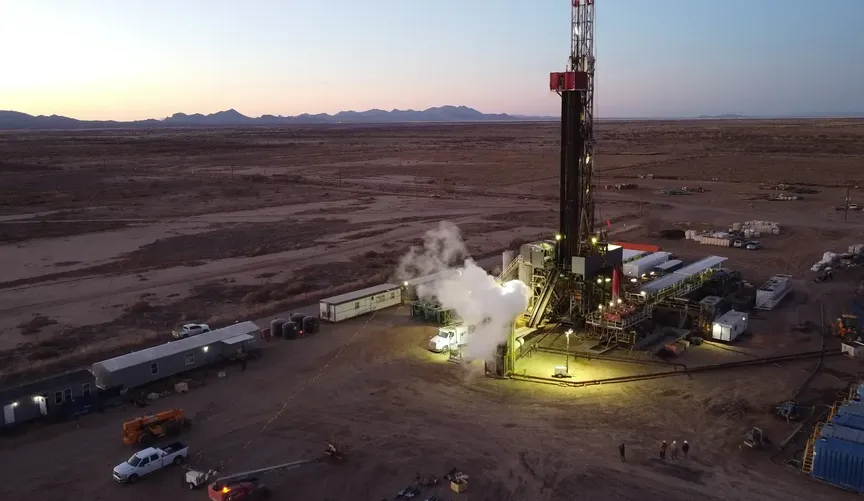
The productivity over the past year at the Lightning Dock site “fundamentally changes how people think about these types of systems that we really thought we understood in the past,” says Zanskar co-founder Joel Edwards.
It’s the latest bit of good news for the long-neglected geothermal industry, which is experiencing an investment renaissance. Innovative drilling technology and artificial intelligence — along with a little bit of luck — played roles in the milestone. And while not all traditional wells may have the same set of circumstances as Zanskar had at Lightning Dock, the company says that its success is a wake-up call that old well sites are still worth further exploration.
Traditional geothermal energy relies on tapping hot water within the earth to generate electricity by pumping it to the surface and spinning turbines. In theory, it’s an excellent way of generating renewable baseload power: People have been harnessing steam from hot springs for thousands of years. But geographic constraints — power plants need to be situated on geothermal reserves, which are overwhelmingly in the western U.S. — as well as the difficulty and expense traditionally involved in finding new wells mean geothermal energy constitutes less than 1 percent of the electricity mix in the U.S.
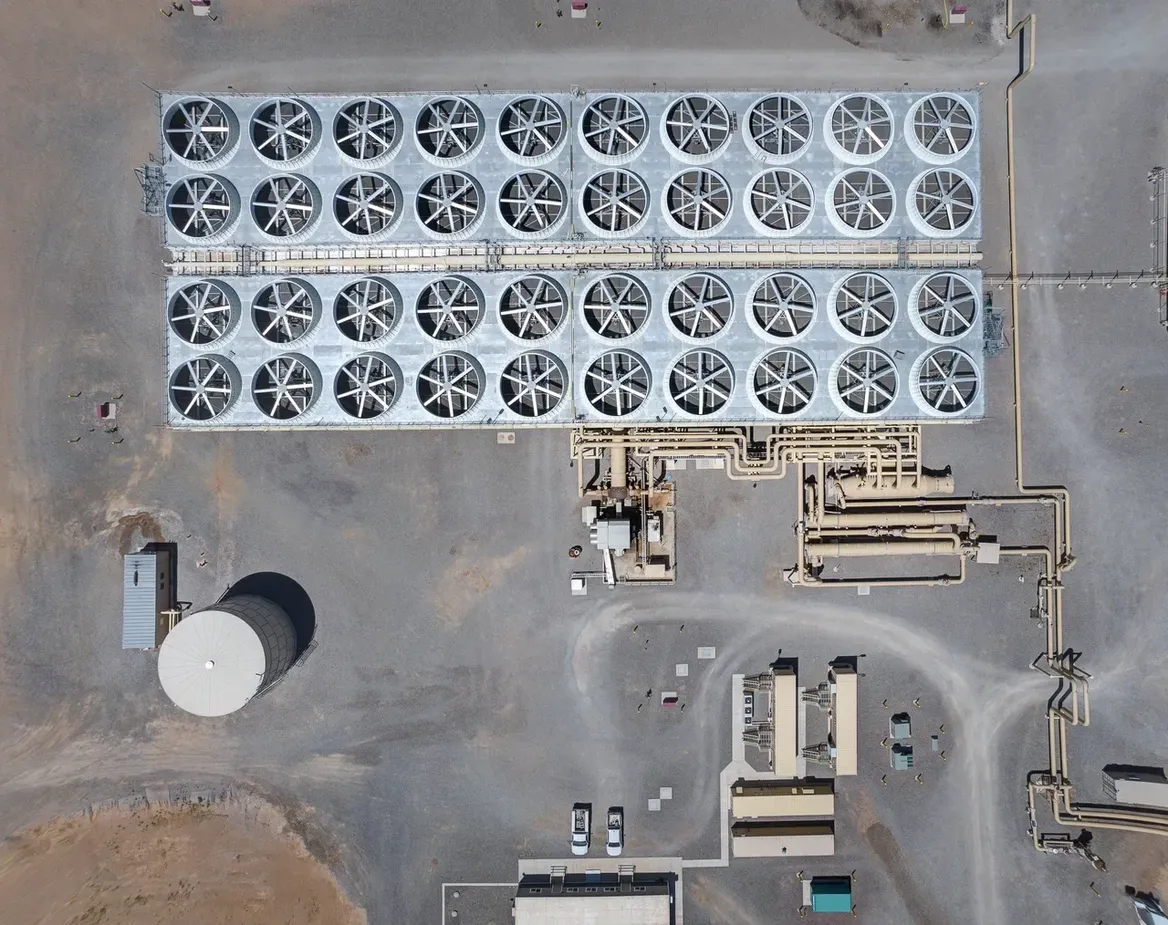
Another challenge for the industry is that most wells gradually see declines in productivity. But Lightning Dock’s decline had been particularly steep, losing between five and 10 times as much heat each year as average wells, Zanskar says. When the company bought the site, temperatures in the original wells, which were less than 2,500 feet deep, had cooled some 50 degrees Fahrenheit (10 degrees Celsius) to about 250°F by 2024. The on-site 15-megawatt power plant, which supplies electricity to New Mexico’s largest utility, was designed to operate at temperatures above 300°F.
While conventional geothermal wells usually go down 3,000 to 5,000 feet, drilling deeper wells can tap into hotter reserves of water to use for power. But tighter rock formations deep underground make drilling more challenging — and costly. Whether or not to drill deeper is “basically a question of economics,” says Roland Horne, a senior fellow at the Precourt Institute for Energy at Stanford University. The cost, Horne says, is not linear: “If you drill twice as deep, it costs four times as much.”
To help make better bets on drilling, Zanskar uses artificial intelligence to identify what are known as hidden systems — that is, sites with ample geothermal potential but little to no signs of their viability on the surface. The company used the technology last year to make a discovery in Nevada, and it says that same modeling also helped pinpoint where to most productively drill at the Lightning Dock site. It combined those models with drill bit technology refined by the oil and gas industry, which helped it drill deeper holes 35% faster at what Zanskar says is a “competitive cost.” (The company didn’t provide specifics.) The new 8,000-foot well has been operating for a full year, with heat levels above where they were before the decline.
“We knew that if we were going to buy this field, we were committed to drilling deeper and going after it,” says Edwards. Edwards says that the new well is so productive that it has, on occasion, supplied “too much heat” to the existing power plant, suggesting that it could power a larger facility.
“We expect, if you look at peers of this well, it has the attributes to be productive for decades,” Edwards says.
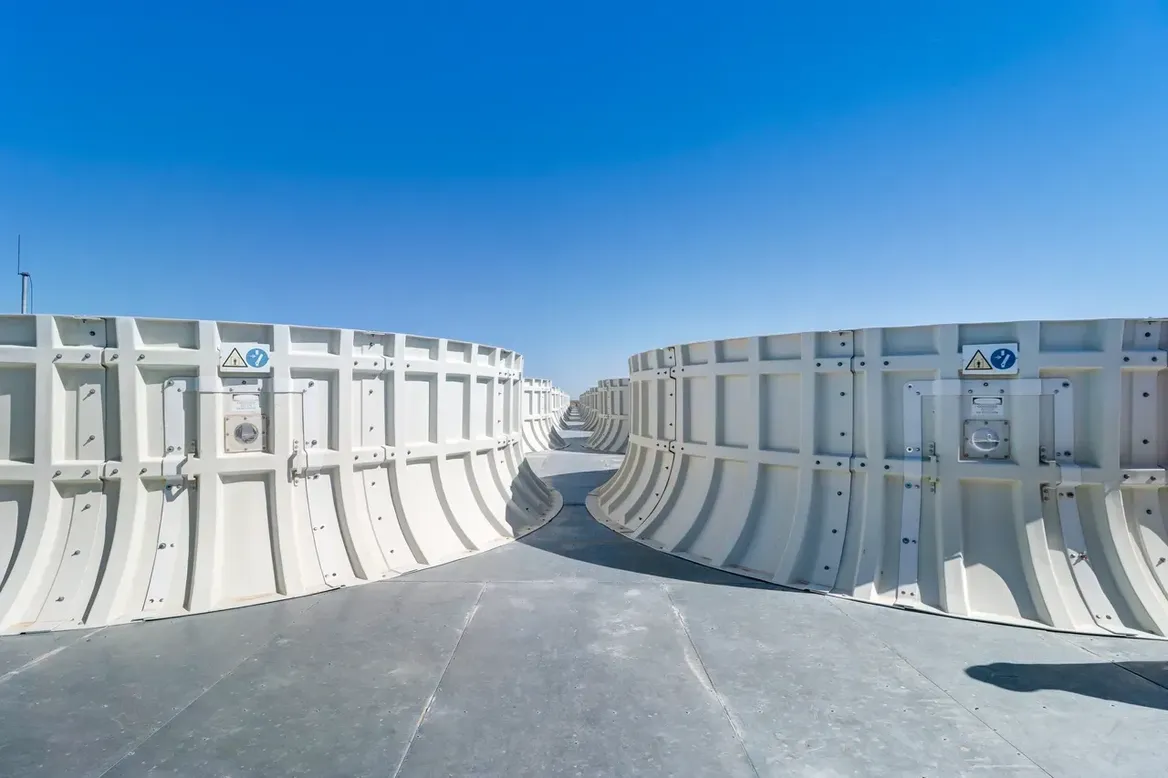
Horne points out that by buying a developed site with an existing power plant, Zanskar offset a big cost sink compared to starting from scratch. Another company had also already drilled a deep exploratory well at Lightning Dock in 2022, which, Horne says, gave Zanskar valuable geologic information to help with its modeling. (Ben Brenner, Zanskar’s director of federal affairs, tells WIRED in an email that data from the other well was incorporated into its modeling, but the company “never saw that particular well’s data as somehow definitive or essential.”)
“They haven’t discovered anything revolutionary,” Horne says of the techniques used at the Lightning Dock site. Still, he says that the statistics provided by Zanskar “hold up” to make it one of the wells with the highest flow rates — a measure of productivity — in the U.S. While at least one other facility in Nevada has wells with higher flow rates than Lightning Dock, Brenner says that those wells are “much colder” than Lightning Dock’s, which will make them less productive over the long run.
“It’s a really good well,” Horne says.
This has been a big year for the geothermal industry, particularly for companies that are using new technologies to tap the earth’s heat. Enhanced geothermal company Fervo Energy went public in May, raising $2.2 billion, although there has been a pullback in stock prices since its debut. Venture capital investors — who typically have veered away from geothermal — have also been putting money into the industry, says Stephanie Díaz, a senior associate at BloombergNEF. Venture capital and private equity investment in geothermal startups has hit $432 million through the first six months of this year, meaning that “2026 is shaping up to be the best-funded year for geothermal startups since BNEF began tracking in 2022,” Díaz says. That total includes Zanskar, which raised $115 million in a funding round in January, one of the largest raises in the sector this year.
Unlike what Zanskar is doing, enhanced geothermal uses a technique similar to fracking and requires hot rocks rather than hot water, opening up the possibility of drilling wells in areas that have been off limits. Because of this, companies like Fervo have been the focus of much of the recent investment and attention in the industry, Díaz says.
But Díaz says data-driven approaches like Zanskar’s can help de-risk traditional geothermal development. Lightning Dock, Díaz says, is also a good example of finding “adjacent areas to work that have worked historically.”


.svg)
